
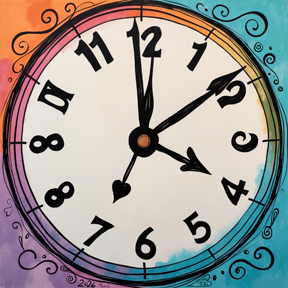
Sometimes one hour is not just one hour; Routines are part of the safety architecture of the day.
Tru here. This entry is by Truthful Loving Kindness (my full legal name) for my blog at https://truthfulkindness.com/. If you have comments or questions, please use that website. Writing is harder now. i started using edit help from ChatGPT during Feb2026, which improves readability and reduces the time I spend in the writing process, but retains my writing style. I am still on the free version of this blog, which means more ads which i have no control over. I am working to move to the paid version to avoid advertisements.
This year’s shift to Daylight Saving Time seems to be hitting me harder than usual.
Three mornings in a row I have woken up already feeling slightly off, and only later realized why.
I had missed my early-morning protein drink — the one I rely on to bring my blood sugar back up after the night.
Each time the nausea is what reminds me.
That is my body’s signal that a step in the routine has been skipped.
The difficulty is not just that one step.
The entire day feels scrambled.
My internal clock is not yet ready for sleep when the alarm says it is time to begin the bedtime routine.
… then morning arrives before my body feels finished with the night.
So each part of the day carries a little more pressure. My routines that usually guide the day begin to feel rushed and slightly out of step … then they are a lot out of step.
This experience is not mine alone.
*** As my friend Rick Phelps, who is also living with dementia, writes about time changes, even a one-hour shift can disrupt sleep, increase confusion, and make late-day symptoms like sundowning more likely. The change may seem small on the clock, but it is not small to the brain. (See Link below)
*** And from the teaching of Teepa Snow’s organization, there is a similar reminder: when routines are disrupted, the brain has to work harder to make sense of the day. That extra effort can show up as irritability, fatigue, or distress — not because something is “wrong,” but because the system is under strain. (See Link below)
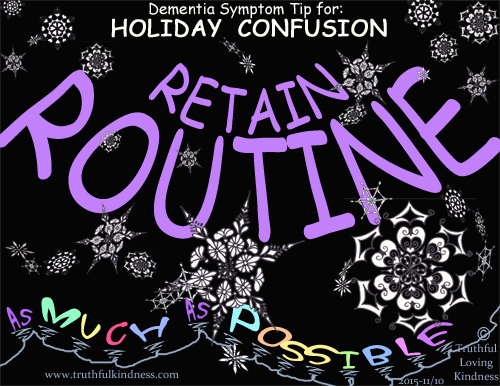
Living with dementia means that much of daily life depends on carefully built routines.
They are not just habits. They are part of the safety architecture of the day — helping me remember when to eat, when to rest, and when to do the small things that keep my body steady.
When the clock suddenly shifts, those supports wobble for a while until the body and the schedule learn each other again.
Usually the body catches up eventually.
Until then, I try to move a little more slowly and listen carefully to what it is telling me.
Update 14Mar2026: Last night (nearly a week after time change) i finally got a “normal” amount of sleep, and it was at least somewhere near my usual bedtime. So that is encouraging.
Links from Persons Living with Dementia:
Rick Phelps at >> https://www.agingcare.com/articles/daylight-saving-time-can-trigger-sundowning-212605.htm ;
Links from other EXPERTS:
Teepa Snow at >> https://teepasnow.com/blog/dementia-reducing-increased-risk-of-irritability-caused-by-time-changes/ ;

Administrative Notes
I did not track the exact hours invested in this entry. Started this blog entry 2026Mar10 and finished 2026Mar19.
The subscription box now appears at the bottom of each blog entry.
My full legal name is Truthful Loving Kindness.
My current formal diagnosis remains Mild Cognitive Impairment (MCI). However, due to long-term functional losses — including loss of employment and driver’s license — my Primary Care Physician and several other medical professionals consider my condition more consistent with progressive dementia. My symptoms primarily reflect Lewy body and vascular patterns, including REM sleep behavior disorder, hallucinations, and cognitive fluctuation.
Brain imaging (SPECT and PET) has shown significant temporal lobe involvement, creating overlap with logopenic variant Primary Progressive Aphasia (a subtype within the frontotemporal spectrum).
After years of specialist consultations, my family and I chose to discontinue further diagnostic pursuit. Travel distance and emotional cost outweighed potential benefit. My lived experience of neurologic change continues regardless of terminology.
A current working theory for contributing factors includes 33 years of undiagnosed tick-borne illness (Lyme and Babesia), followed by five years of intensive treatment.
Text copyright © Truthful L. Kindness, 19 Mar 2026.
Painting copyright © Truthful L. Kindness, 19 Mar 2026.
You can learn more under the “About Me” tab (which is due for updating).
Comments are welcome. Please filter responses through truthful loving kindness toward all concerned.
Editing assistance: I currently use ChatGPT to improve readability and reduce writing time while retaining my voice and authorship.
This blog operates on a free platform (aside from the domain TruthfulKindness.com), and advertisements are automatically generated. I have no control over which ads appear. I am exploring transition to a paid plan to remove ads.
Categ: Important, Sx, Dementia Symptom Tips. Tags: Time Change, Body Clock, Lewy Body Dementia, Daily Routines, Cognitive Fatigue, Blood Sugar, Living with Dementia, Dementia Strategies, Safety Architecture, Life with Chronic Illness
Attached Picture: This clock picture started with painting i spent 9 days on (2026Mar10-19), then asked Ai to complete it for me, then brought it back over and made finishing touches. Don’t know why this took so many hours, but it was difficult for me. “Retain Routine” picture was finished by me on 2015Nov10 (for use in a previous blog entry).
Reposting Policy:
You are welcome to repost my writing provided that:
- My legal name (Truthful Loving Kindness) is clearly credited.
- It is clearly stated that the content was not written by you.
- A prominent link to my website (http://www.truthfulkindness.com) is included.
If an advertisement appears below this entry, it is platform-generated and not endorsed by me.
Discover more from Truthful Loving Kindness
Subscribe to get the latest posts sent to your email.
