My Blessing is almost 13


Tru here.  Hope to get computer from shop sometime this week.  Until then limping along without my FaceBook friends. So here is this week’s entry (without photo for now) kind-of unrelated to dementia symptoms, but when I sat down with pen this is what came out because this is what I am thinking about.

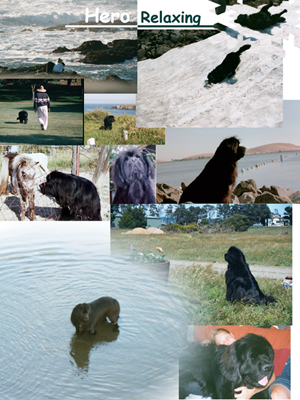
Newfoundland dog life expectancy is only 9 to eleven yrs old, & Blessing turns 13 this week. She has always personified energy & enthusiasm, but today she is tired & resting.

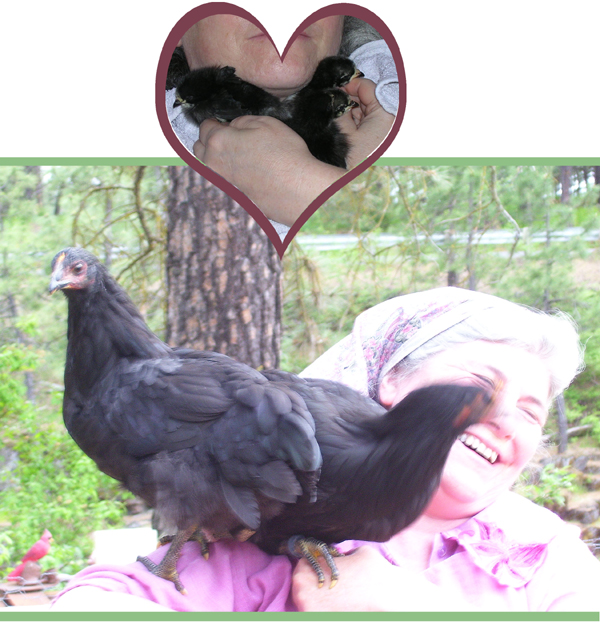
Currently, Blessing considers her main job as a babysitter for the chickens. When they were baby chicks she would lay for an hour at a time, head on paws, just making sure no cats or large birds endangered them. Now chickens come running when Blessing enters the yard.

Yesterday I went out to find the cause of her repeated chirps of appeal. Blessing was laying in the middle of the yard, calling chickens away from the far fenceline.

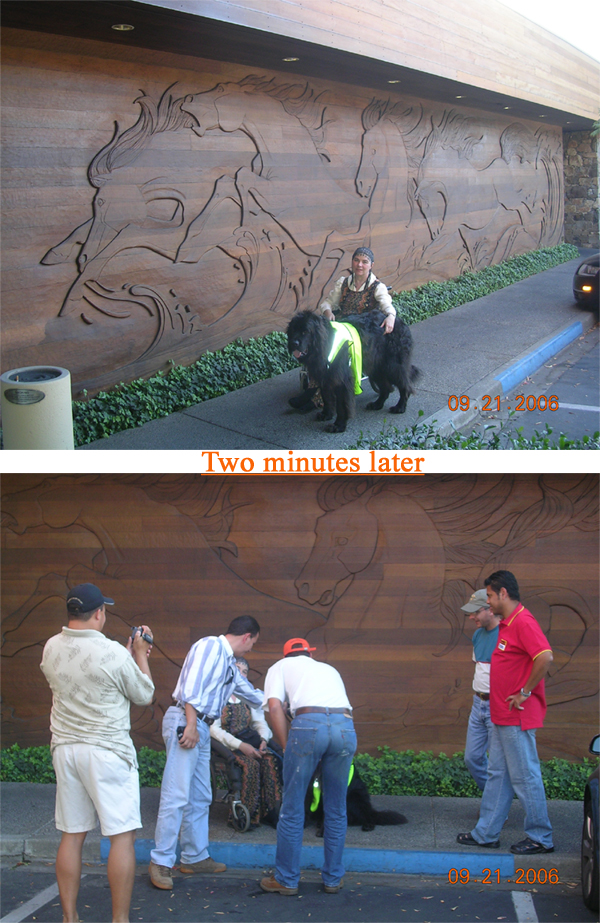
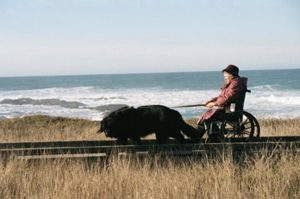
But Blessing’s greatest enjoyment was her status as Service Dog. She thought pulling a wheelchair was the height of glory.

Today she dreams & her legs move rhythmically during sleep. Who knows? Maybe her memory carries her back to proud carriage & perky step, again doing the job she loves most; pulling a wheelchair..
Sent via BlackBerry by AT&T

alzheimers best blogs badge
Healthline

Letter of Thanks

Perth Speech byGRB 20150417a 4in200ppi

Tru here on Sunday, April 19.   On Friday, I finished my first public speech in many years, on subject very important to me; Value of PWD Lived Experience as Contributor towards Dementia Friendly Community.  Husband took these pictures as part of the video which we hope to post soon.  Saturday there was a meeting, and …

Realized this morning that I have just passed one of those tipping points. Until this ADI Conference of 2015, I have thought of my “team” in advocacy efforts as only my friends in Dementia Alliance International and my Dementia Mentors “family” (of course, plus our good friend Dr Shibley Rahman). Looking back, some conflicts of ideology with care-partners had created a bit of an “us-vs-them” mentality.

The closer contact with individuals during these conference days has changed that. Except for yesterday’s ADI-DAI meeting, the most influential effects have been “chatting” and meals during after-hours contacts. But actually the largest effect was from the “teamwork” atmosphere during the meeting between the DAI members present, ADI Staff members Marc Wortmann and Jane Cziborra, and ADI Chairman-Elect Glenn Rees.

As usual, I have little memory of words spoken, but much memory of the feelings engendered from the meeting. The main thing was the feeling of an older brother (which I have never really experienced as an eldest child). The feeling of independence, alongside inter-dependence was actually quite profound. As a speaker, but especially as a DAI member, thank you for the opportunity to participate in that meeting. It created a paradigm shift for me.  Also my thanks to Workshop chair, Mike Splain, for his assistance in my speech preparation.

Thank you,
Truthful Loving Kindness
Sent via BlackBerry by AT&T

Still visiting this beautiful Land Down Under & will further report on my adventures from security of my PC when I return home.  Love to all.

* Admin issues: SHARE dementia awareness thru buttons below. If interested in receiving notice of future blog postings there is a “follow” button in the upper left corner (MS Explorer) or lower right (Safari and Chrome). Feel free to leave your thoughts in the form of comments, but please filter your comments with truthful loving kindness to all concerned. If there is an advertisement below, I have no control over what is shown. — Full legal name Truthful Loving Kindness copyright on 2015-02/24.

MyFreeCopyright.com Registered & Protected

alzheimers best blogs badge
Healthline

Value for Lived Experience of PWD as Contributor to Dementia Friendly Community

819 Blog 20150406 Perth 1a 3in130ppi

Tru here.  Been VERY busy preparing to speak at ADI 2015 Conference in Perth Australia this month. “PWD Dementia Success Stories” booklet should arrive from printer any day, and we leave in less than a week.  My suit for speaking is almost finished – just a little bit of final stitching to do. Realize most will not be able to attend this conference, so thought you might be interested in my oral presentation; current draft (along with slide presentation) is below.  ((PS:  Will be flying from late Sunday until Tuesday night, so will not post again until we return home the first week of May.))  :

 Update: Full video now available at link below.
https://www.youtube.com/watch?v=_N0kqZVgWiI

UPDATE:  Below is actual transcript from speech given.

Okay; 15min on:

“Value of PWD Lived Experience as contributor to Dementia Friendly Community”;

Hello.  I’m Truthful Loving Kindness.

If I am a Person With Dementia, (PWD) and my brain is dying … what can I personally contribute toward Dementia Friendly Communities?

I can share my Lived Experience;

… what particular swiss cheese of dementia symptoms I have;

… what areas of life have holes instead of cheese and skills,

… and how to make the most of the skills that are left.

… in hopes that you, as Coach, Professional, or Loved One,

can apply that lived information in your relationships,

because … “Community” is made up of relationships.

So … diagnosis:  My cognitive problems first became noticeable in the year 2000,

but it took 12 years before I got even a tentative diagnosis for dementia.

…  How can you personally apply that information in YOUR relationships?

…  Often dementia is a gradual slope,

so do not assume that diagnosis means the next step is adult diapers and a care facility.

If you are a person without dementia then help the Person With Dementia (PWD); help the PWD make appropriate legal preparations, so that job is not hanging over our head,

… but acknowledge the fact that we have a lot of living before we get to end stage.

 819 Blog Perth 2a 3in125ppi

(( Slide change = Success Stories; “I did know how to do this – there!”))

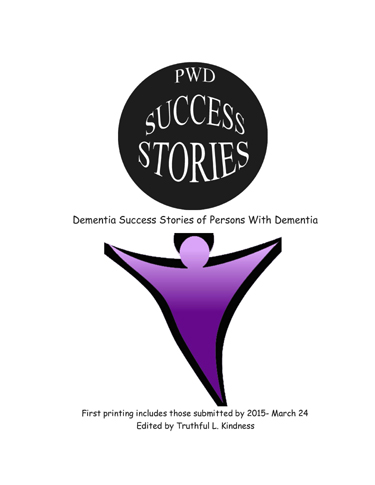
In order to emphasize that fact, my friends and I put together a booklet called “PWD Success Stories”. There are free ones over there on the table, and I see some over there too. They are free but this project is funded by my own wallet, so after you get done reading one can you pass it on to another Person With Dementia, or a Coach, or Professional.
If you are a Person With Dementia (PWD) then I’ve got great news for you! There are peer groups ready to share their Lived Experiences in order to enhance this time in your life.

 819 Blog Lantern by Harry 4in100ppi

(( Slide change = Harry’s Lantern))

So, after diagnosis:  2yrs later I discovered the wonderful online peer groups and blogs. Let me introduce the blog from a friend of mine named Harry Urban, diagnosed more than 10yrs ago and he was leading the way on this trail when I arrived. He wrote:

I want to go home, where I belong.  … I don’t belong here and can’t understand why I am here.  These are the thoughts that go through your mind when you suffer from some form of dementia.

…  Your life is being forgotten.

You look around and don’t recognize anybody or where you are.  It doesn’t seem right and you just want to go home. The problem is, … I don’t remember where home is.

I may be at the point of no return.  …  “I want to go home”, but no one can reach into my mind to help me.  I am alone and wandering down this road.  …

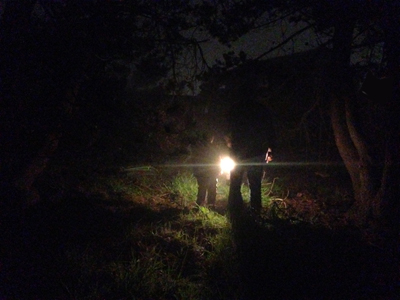
Harry’s blog reminds me of my Daddy leading the way:  When Daddy and I were walking in the night he held the lantern out to his side.  That enabled Him to see a bit of the road ahead, and me to see a bit of the trail in between.  This Dementia Trail is full of bumps … and tangles of thistles!!   And thru our writings we can sign-post the dangers as we go, for those following behind.  Coach and on-looker can observe and assist, but we on the dementia trail itself have a unique perspective.  Someday there will be a cure, and we hope the trail will not last long enough to become a well-worn path.  In the meantime we continue to shine the light on our trails by writing, or making video, … or speaking with groups.

A few days later Harry bounced back with this:

Have you ever had the feeling that you helped someone you never met?  …  I shed tears when I am able to help someone that has no one else to turn to.  I call it my work but it is a GIFT given to me by this horrible disease I have called Alzheimer’s.  Alzheimer’s has taken me to the darkest of places and I had to learn how to crawl out or be stuck there for the rest of my life.  It is not just a social commitment or a part time endeavor; this is what I am supposed to do with my life. … Unless you walk the path, you have no idea.

Harry is a motivator for writing in my blog, & was one of the founders for “Dementia Mentors”.


(( Slide change = DM Poster ))

I made this poster for Dementia Mentors, in memory of my two grandmothers who walked the Dementia Path before I did.

“Since I learned from those who went before me & led the way, I do not dread what is to come.

This is not a NEW path, even tho it is unfamiliar to me.

Like those before me, I will travel this path with honor and integrity, lighting the path for those who follow

… until a cure is found.”

The peer group of Dementia Mentors is a primary support for me.  It is not only something I “want” … it is something I need.  After beginning the video chats on Wednesdays and Fridays, I turned to my husband and said, “You know what?  Right now I FEEL normal; really I know that I am not – but I FEEL like I am.  I have so much in common with my friends that during our chats … I AM normal!” Dementia Mentors are one of the resources listed in the PWD Success Stories booklet.

 819 Blog Perth 5a 3in100ppi

(( Slide change = Swiss Cheese Symptoms ))

Back to my SWISS-CHEESE symptoms:  My most intact skills are in Research, Relationships, and wRiting.  In contrast, the biggest holes (where symptoms have removed my abilities) are in Reading, ‘Rithmetic, and Remembering.

… My reading comprehension has now dropped from University-level to 4th grade.
… My last job was in Accounting, but now I couldn’t tell you whether 44 was larger than 37.
… And my husband says I often repeat the same question.
I also have a hard time recognizing the way he looks, but I recognize his voice immediately.
I have smell hallucinations, usually of something burning, (which I discovered is a very common smell with my PWD friends) and once in a while I have visual hallucinations –usually bugs. (How fun, huh?)
However;
notice that the remaining skills allow me to maximize sharing of my Lived Experiences.  

819 Blog Perth 6a 3in125ppi

(( Slide change = DAI ))

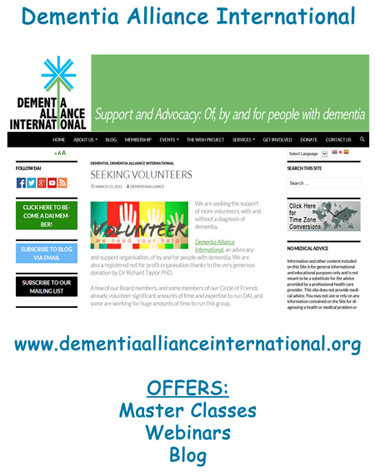
What else?  Another aspect of life after diagnosis is working on Dementia advocacy.  We take the portions of our cognitive functions that remain and APPLY them to Awareness and Advocacy projects.  Dementia Alliance International (abbreviated DAI) is the formal non-profit organization that I look to for that area of my life and contact information is, again, in the booklet.  It is also written here (pointing to overhead).

I have been forgetting to cross things off as I went, so I have no idea where I am. Ummm — there it is!

… completely by – and for — Persons With Dementia.  We offer video & text support groups, but also it seems like it is geared to help train us as spokespersons to the world.  I am currently in their groupings for Speaker’s Bureau and for Video, but there are several other outreach groups – again by and for the Person With Dementia.  Recently World Health Organization collaborated with DAI on what they called “The Wish Project”, and Alzheimer’s Disease International also agreed to start collaborating with DAI as an independent international group of people living with dementia.

This is an exciting development, and, as the DAI news-flash states, “DAI has worked for almost twelve months towards this, and are very hopeful it is the beginning of significant change towards ensuring the voices of people with dementia are heard. Most importantly, that we are always included in the conversations about us, on the things that impact our lives and futures.”

… Okay … that is a lot to go on – for a Person With Dementia, but what if you are a person without dementia?  What does  this have to do with you?  … or with “Dementia Friendly Community”?
For one thing, request a speaker from the DAI Speaker’s Bureau.
Regularly access the DAI Master Classes,
Webinars, and
Blogs in order to see life from the perspective of Persons With Dementia.

 819 Blog Perth 7a 3in150ppi

(( Slide change = PWD Perspective ))

And that is why I started the monthly online newsletter of “PWD Perspectives”; to allow others to see life ‘Thru the Looking Glass’; from life perceptions of my fellow Persons With Dementia (or “PWD”). No revisions, explanations, or printing format is available with the newsletter; it is simply a collection of gathered links from what we write, or video, or artwork of Persons With Dementia; just like a search engine only it is in one place.

 616 blog C20 Color 11in200ppi

(( Slide change = Art – For purpose of saving blog memory requirements, posted repeat of this picture despite also contains my art in center – actual slide used in speech does not have mine added ))

Artwork above is based on my friends’ symptoms of sensory overload from Fronto-Temporal Dementia, and hallucinations that can occur even in early stages of Lewy Body Dementia  … meanwhile here are a couple more excerpts from other persons:

I myself wrote a piece on Conversation Tips from patient perspective, which many have found helpful and I brought a few copies — over there (pointing to table).

Robert Bowles wrote: “ASAP squared” means …

A … As Soon As Possible;  S … maintain equal … (Oh!  I’m sorry — I skipped.)

A  … find Acceptance of the diagnosis, (That makes a lot more sense!)
S  … maintain equal or greater Social interaction …
A  … develop an Attitude that is positive and focuses on my two mantras, and
P  … find your Purpose in life since your diagnosis.

Robert’s two mantras are
(1) Live life like never before, Live life to the fullest, and
(2) I do not have time to die, I have too much to live for.

Tommy Dunne posted it very concisely: Dementia has taught me that I’m here to do a job.  It’s shown me that I still have a purpose & a duty to fulfill … before time runs out.

You can see significant things are being produced. I think verbal and artistic produce from Lived Experiences of Persons With Dementia ARE able to contribute toward Dementia Friendly Communities.  Despite our “Dementia” label – or maybe BECAUSE of that context, it is very important to value the product from our remaining cognitive abilities.  One of the best ways is to listen to our words – truly LISTEN, not just wait and endure while we are speaking – not just quickly scan what we write.  Instead reflect on our thoughts and art, so that you can APPLY that to your relationships.

Time is up … Thank you very much for LISTENING !

………………………………………………………………………………………………………..

speech took 14.5 minutes

* Admin issues: SHARE dementia awareness thru buttons below. If interested in receiving notice of future blog postings there is a “follow” button in the upper left corner (MS Explorer) or lower right (Safari and Chrome). Feel free to leave your thoughts in the form of comments, but please filter your comments with truthful loving kindness to all concerned. If there is an advertisement below, I have no control over what is shown. — Full legal name Truthful Loving Kindness copyright on 2015-03/15.

MyFreeCopyright.com Registered & Protected

alzheimers best blogs badge
Healthline

Animals and Dementia Symptoms Part3

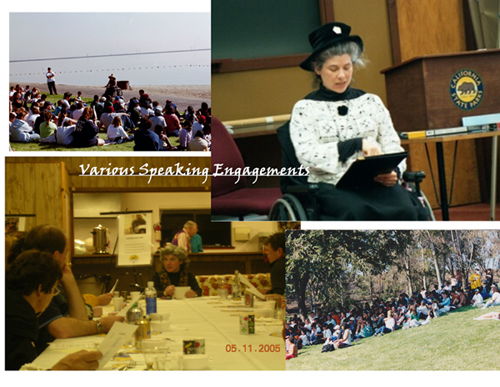
819 Various Speakg Engagmnts 04in125ppiTru here.  This is last installment of answer to those who have asked about Service Dog issues.

Assistance Dogs International (ADI) approximates 120 hours over 6 months. A well-trained Service Dog should be trained 1 to 2 hours per day over 6 months – in other words 180 to 360 hours.

ADI “Benefits of Certification:  Since there is no standard certification process, this would vary with the organization you chose. Some programs offer a thorough certification process that can take two or more years and could include training classes, field trips and in-home instruction. In addition to being able to take pride in what you and your dog have accomplished, as a “certified” graduate, you might receive the program’s identification card and dog equipment, be included in the program’s liability insurance coverage and be offered assistance from the program should you be denied public access. Each program’s requirements and benefits are different and it is up to you to be a good consumer and find the program that best meets your needs.”

http://www.assistancedogsinternational.org/standards/training-programs/


My thanks to International Association of Assistance Dog Partners (IAADP) for the following information since I have been “out of the loop” for Service Dog information in the past 6 years;
Dept Of Justice definition of SrvAnimal was revised in 2010 to read : Service animal means any dog that is individually trained to do work or perform tasks for the benefit of an individual with a disability, including a physical, sensory, psychiatric, intellectual, or other mental disability. Other species of animals, whether wild or domestic, trained or untrained, are not service animals for the purposes of this definition. The work or tasks performed by a service animal must be directly related to the handler´s disability. Examples of work or tasks include, but are not limited to, assisting individuals who are blind or have low vision with navigation and other tasks, alerting individuals who are deaf or hard of hearing to the presence of people or sounds, providing non-violent protection or rescue work, pulling a wheelchair, assisting an individual during a seizure, alerting individuals to the presence of allergens, retrieving items such as medicine or the telephone, providing physical support and assistance with balance and stability to individuals with mobility disabilities, and helping persons with psychiatric and neurological disabilities by preventing or interrupting impulsive or destructive behaviors. The crime deterrent effects of an animal´s presence and the provision of emotional support, well-being, comfort, or companionship do not constitute work or tasks for the purposes of this definition.

Also noted is: (4) Animal under handler’s control. A service animal shall be under the control of its handler. A service animal shall have a harness, leash, or other tether, unless either the handler is unable because of a disability to use a harness, leash, or other tether, or the use of a harness, leash, or other tether would interfere with the service animal´s safe, effective performance of work or tasks, in which case the service animal must be otherwise under the handler´s control (e.g., voice control, signals, or other effective means).

……  ***  ……  ***  ……  ***  ……

And special thanks to Joan Froling, the current Chair of IAADP for personal response and sending me the following link of letter she wrote about task often associated with Service Dog task for Dementia Symptoms:

http://www.sterlingservicedogs.org/Articles/WhatCaregiversNeedtoKnow/tabid/82/Default.aspx

Some excerpts from above link regarding specific task of SrvDog alert (for dementia patient attempting to leave the house) as PRIMARY preventative for wandering are: “As wonderful as service dogs can be, they are not the right kind of assistive technology for every disabili…ty and every situation.” … “Ill health, thunderstorms, anxiety over changes in the household routine or lack of practice are additional reasons why reliance on a service dog in ((some situations)) is akin to playing Russian Roulette.” … “I can appreciate the benefits of a facilitated partnership. But on a pragmatic basis, with regard to this particular safety issue, the caregiver needs to find something more dependable out there than a dog’s desire to earn a treat.”

(((It appears that she does not negate this as a task, but rather strongly feels that the Service Dog should not be the ONLY tool in the tool box of dealing with this particular safety issue.)))

And this is her extensive write-up of Service Dog tasks for Psychiatric DisAbilities:

http://www.iaadp.org/psd_tasks.html

……  ***  ……  ***  ……  ***  ……

Other Notes I found:

Blessing’s Vocabulary on 02/20/05:  All-done, Bark, Bath, Come, Drink, Lay, Mouth, Nosey, Over, Potty, Pull, Roll, Scoot, Scratch, Shake, Sit, Stand, Still, Take, Visit, Walk,

Combinations: Look _____, Bring _____ , Go to _____, Leave _____, Jump _____, Want _____ ?

Blessing Vocab Nouns & Names on 02/20/05:  “B” (for me) Apple, Baby, Banana, Bed, Bird, Blanket, Blessing, Bowl, Brush, Carrot, Cat, Cauliflower, Chip, Collar, Couch, Dog, Ear, Fence, Foot, Hero, Hole, Hose, Jessie, Keys, Kid, Kitchen, Lap, Pool, Porch, Skateboard, Tail, Thing (whatever I point to), Trailer, Van,

Will “Bring” these items:  Blanket, Bowl, Brush, Carrot, Cauliflower, Chip, Collar, Thing (whatever I point to), Keys,

 *     *     *     *     *

Found text from part of my speech from later in 2005 so thought it might interest folks.

Notes for my Speech: Value of a Service Animal 2005 Aug 10

I have been asked to demonstrate the value of a Service Animal.

According to 1990 ADA, a Service Animal is any animal trained to do one or more tasks that will mitigate a disability. There are many disabilities that a Service Animal can help with. My disability is neurological and rheumatological. I have neurological damage or disease, osteoporosis, Fibromyalgia, Chronic Fatigue, extreme hypoglycemia, irritable bowel, and many of the other maladies that I inherited along with Fibromyalgia. (By the way, today is Fibromyalgia Awareness Day for 2005.)

My physical disability stems from continual pain and compromised energy; my energy can go so low that I can’t chew. Energy is very connected within your body, and when my physical energy goes flat, my mental and emotional energy are also extra low.

However, I have been mentally alert enough to drive every day for over a month now. That’s extremely exciting! In fact, this Sunday was my first day at church without the wheelchair. Hero helped me with just the walking harness.

I would like to explain life “before” a Service Animal (SA), and “after” a SA, but I really can’t because my disability took effect gradually, and Hero’s abilities to compensate kept pace with my dis-ability. My leg pain and fatigue became noticeable by about 18 years old, but then went into remission for many years. I enjoyed dancing, skiing, and most of the things other people do. In 1992, I was holding down the job of office manager at a hazardous waste facility. I was walking more than one mile during lunch break every day, and was considered somewhat of a ‘workaholic’. That job became complicated when we were bought by a company I couldn’t respect, and I quit. I worked several temporary jobs. One summer I was hired by an attorney.  I was hired as secretary to the Controller of a large organization. (In other words I was in BookKeeping.) One day, in 2000, I called the doctor at noon. I told him that I had too much pain to concentrate on work. I needed to go home because I couldn’t do my job.


Change of Scene: My dream dog was a newfoundland – bred for ocean rescue and the “Nanny” of the dog family. For 13 yrs I had wanted a puppy but they are not a common dog and very expensive. On the afternoon of that first day with too much pain to work, I received a call from a newfoundland breeder saying that a 2-1/2 year old male needed a home. His first home considered him aggressive and dominant, and his second try for a home only kept him one night before deciding that he wouldn’t work, so we could have him for vet expenses. We were warned that he was allergic to protein and would require prescription kibble all his life. The vet told us he also had one severely dysplastic hip and would require “mild to moderate exercise every day of his life to keep the muscles strong enough to hold that hip in place”. (Which is also why he is kept at the low weight you see.) With what we consider his MISdiagnosis of aggression and dominance we were not surprised to discover that he had been hit more than once.

Carting is a traditional Newf task, and the vet approved, so we joined the local newfoundland club and began draft training to pull a cart.

My health continued to go downhill. Soon I was tripping, fell in the rose bushes several times, and began using a walker. My employers said they couldn’t meet my doctor’s criteria for return to work, and I began the long process for disability. Six months after we got him, we transferred Hero’s training to pulling a wheelchair instead of a cart. He was certified six weeks from when I got the wheelchair.

Six weeks is a remarkably short training time. The Delta Society estimates 4-12 months training, and Assistance Dogs International expects 120 hours over 6 months, but you need to remember several things: 1) The Newf was bred to pull; to pull people and boats in the water, and loads of fish on land. 2) Hero had six months of intermittent cart training before we got the wheelchair –and all newfs that I know of required very little training for their mobility tasks. I think Blessing must have loved pulling a wheelchair even before she was born! 3) I believe that G0d didn’t make Hero to be hit, he was created to be my partner, so very little time was required.


Notes for during DEMO of wheelchair: One difference between my partnership with Hero, and partnerships with a Service Dog trained in an organization is that (obviously) we self-trained Hero to meet my specific needs. At the time, I saw no need to prevent Hero sniffing the ground as he walked. Later I discovered that it gives observers the impression of an untrained dog if they see this. I decided “so what”; he was meeting my wants as well as my needs, and I didn’t mind meeting his wants. I could do that because I self-trained.


I still have a lot of abilities: I can walk, run and lift boxes; I am able to do a lot of the things that most people can … I just have to pay a much higher price for doing them. An example is when I have to run for some reason. My energy will be low for several days, or it may put me into a “flare” for weeks or even months! My trip to Montana took six months recovery time, even though I tried to not push myself very hard.

I do lifting, I do walking, and I’ve got good muscle tone. I just have to pick when I do them and budget my energy. A wheelchair has been one of my budgeting resources. To start with, I only used it for long-distance outings like a car show, but as my available energy dropped it became necessary for anytime I wouldn’t have easy access to chairs, like shopping.

I walk a fine line of energy output. Now I use legs and feet to steer, brake and help my dog pull me. If I had a motorized wheelchair I wouldn’t – actually, I couldn’t do that. With my dog’s help, I can conserve energy while still moving major muscles to avoid atrophy and permanent muscle damage. Depending on available energy and sitting areas for a safety net, sometimes I can use a walking harness instead of the wheelchair.


During DEMO of walking harness: Several times, Hero just seemed to know when my mother-in-law was having balance problems. He would walk beside her, keeping pace with her while pulling me in the wheelchair. When needed, his shoulder was right there to steady her. That’s what gave me the idea to use a walking harness. He did not require training for this task; it was a natural.


I have a prescription for water therapy, which is another tool to provide exercise within a safety net. When we moved to Fort Bragg I was pleased to find the town pool had an arthritis class. My driver’s license had been removed due to my lack of physical and mental energy, so Hero and I took the bus twice a week.

One day, about 15 minutes before the end of class, Hero barked. I got out of the pool immediately. This happened a couple times before I ignored him. I really miss dancing and on this day I was dancing in the water. After two more ignored barks, Hero stood at the instructor’s feet and wouldn’t leave until I got out. Guess what? Before I could get dressed (dressing takes a lot of energy) and to the bus stop across the street, I couldn’t even hold up my head, let alone hold onto his lead. I learned how extreme my fatigue could become, and that Hero could predict it.

“Alerting” (or predicting) dogs are some of the most valuable Service Animals there are, and are very frequently used by persons with “invisible disabilities”; disabilities that don’t show. I think most people know that some dogs alert to epilepsy, diabetes emergency, heart attack, and panic attack (and I hear many cats are even better than dogs). This gives the patient time to get to a place of safety or time to prepare wisely.

The dogs I know of give about a 30-minute warning, whether it’s a blood sugar emergency, a seizure, or a panic attack. Hero gave me more than 30-minutes before I couldn’t hold up my head – and I suspect his prior warnings actually prevented the extreme fatigue on other occasions, because I discontinued the exercise that would have triggered it!

*          *          *          *          *          *          *          *          *          *          *          *

Since we’ve still got a few minutes, I’d like to introduce my Blessing. I bought her as a healthy young pup, with what I thought was a good healthy pedigree; specifically as a Service Dog trainee. Since then she has needed eye surgery, multiple x-rays, and she just had her first knee surgery. She reacted to the stainless steel pin and is scheduled for another surgery in a couple weeks. Blessing has not been a low-expense dog! With her joint complications we (the vet and I) don’t know whether I will be able to finish training her as the Service Dog to pull my wheelchair. But… this has given her time to focus on a few other skills. Do you know how much energy is spent pulling off a sock? For me, it’s a lot. She has begun learning how to do it for me. When I drop something, she is right there to pick it up. I can ask her to bring my keys or several other items. When she and Hero finish eating, she brings me their bowls. DEMO of Blessing’s Retrieve

*          *          *          *          *          *          *          *          *          *          *          *

A Service Animal gives me the independence to function without a care-giver. Hero and I have flown alone to Oregon, and last year, after Hero blew his knee, Blessing and I went to Montana. Like I said earlier, recovery time was six months, but we did it!

Any discussion on the value of a Service Animal wouldn’t be complete without adding a note about their emotional value. Not only do they themselves provide emotional support, but their presence prevents the isolation so frequently seen in disabled persons without a Service Animal. People don’t know what to say to a person with a visible disability. If the person is blind, it’s easy, just say nothing and they won’t know you noticed. But someone in a wheelchair is another matter. When I have needed to function without my Service Dog (due to their illness) I discovered my environment changes. Children point and parents tell them not to notice the wheelchair. The little boy asks “What happened to you?” and the mother says it’s rude to ask things like that as she pulls him away. Believe it or not, one day a couple actually held their nose as if they expected incontinence! It sounds like something from a melodramatic movie, but it all happened to me in the span of a few days without a Service Dog. With a dog, it’s a different movie altogether! Everyone is comfortable talking about a dog. People may not remember me, but they remember my dog! Frequently they don’t even notice the wheelchair unless I mention it; I must be the owner of that magnificent dog! Typically, I am stopped every 50’ with questions or with requests to pet my dog.

Please, NEVER pet a Service Animal without asking! What if the Service Animal alerted for epilepsy, and he was distracted from his duties… It could become very dangerous. At the least, it can be a major problem. My biggest problem in finishing Blessing (before she blew her knee) was her visiting. Finally I made two big signs; one hung down each side of her back; “I’m working – no visit”. You know what? She did a great job of paying attention to her job when people weren’t reaching out to her while she was working.

((End of my notes for speech from 2005 Aug 10))

Here are some other Service Dog links:

TopDog Trng Bks & Videos http://shop.happytailsservicedogs.com/
Bk4trng Alz SrvDog http://www.amazon.com/Caregiver-Follow-Me-Alzheimers-Assistance/dp/1477262253#reader_1477262253
SrvDogs: A Brain’s Best Friend http://www.memorylossonline.com/service_dogs.htm
Stonehill Kennel: SrvDogs http://www.k9one.com/service-dogs/
Memory Assist SrvDogs http://awesome-doggies.worldsecuresystems.com/awesome-doggies-san-diego-mobile-pet-grooming-blog/memory-assistance-service-dogs
Memory Abilities of Dogs https://www.psychologytoday.com/blog/canine-corner/201402/the-memory-abilities-dogs
Trng SrvDogs on Dementia Scale http://dogwishservicedogs.com/2014/06/07/training-service-dogs-on-the-dementia-scale-by-bob-taylor/
… Change Lives of Alz Sufferers http://www.agingcare.com/Articles/guide-dogs-for-people-with-alzheimers-153469.htm
Dementia Dog Stories x2 http://www.dementiadog.org/dementia-dog-%e2%94%82-stories.html
Dementia Dog Photos http://www.dementiadog.org/dementia-dog-%e2%94%82-photos.html
Mike Good on SrvDogs Alz http://togetherinthis.com/lets-talk-service-dogs-alzheimers/
FB Dementia Dog https://www.facebook.com/dementiadogproject?ref=br_rs
DementiaDog Case Study http://www.dementiadog.org/Dementia_Dog_Press_Case_Study.pdf
Assistance Dogs Inrntnl http://www.assistancedogsinternational.org/…/training…/
IAADP Conf w/video4Selecting SrvDog Candidate http://www.iaadp.org/conference.html
FB Grp: Dementia SrvDogs https://www.facebook.com/DementiaServiceDogs?ref=br_rs
Joan Froling Article re Safety concern http://www.sterlingservicedogs.org/Articles/WhatCaregiversNeedtoKnow/tabid/82/Default.aspx
Joan Froling SrvDog tasks4Psy DisAbilities http://www.iaadp.org/psd_tasks.html
Sue’s Temperament test http://www.animalsforadoption.org/rvaa/assess_pet
SAFER Aggression Assessment http://www.aspcapro.org/node/72380
Meet Your Match Tool http://www.aspcapro.org/mym
AKC – Canine Good Citizen http://www.akc.org/dog-owners/training/canine-good-citizen/about/


* Admin issues: SHARE dementia awareness thru buttons below. If interested in receiving notice of future blog postings there is a “follow” button in the upper left corner (MS Explorer) or lower right (Safari and Chrome). Feel free to leave your thoughts in the form of comments, but please filter your comments with truthful loving kindness to all concerned. If there is an advertisement below, I have no control over what is shown. — Full legal name Truthful Loving Kindness copyright on 2015-03/15.

MyFreeCopyright.com Registered & Protected

alzheimers best blogs badge
Healthline

Animals and Dementia Symptoms Part2


819 Blog Hero Working 3in200ppi

Tru here.  This posting is just some very basic Service Dog information; an introduction to the subject.

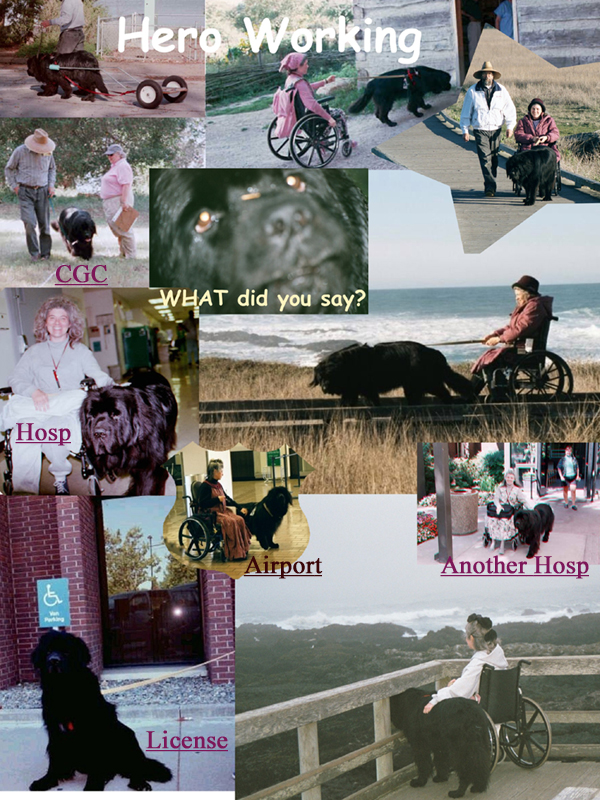
Above pictures start with Hero’s earliest training; learning to pull a cart.  Hero’s next step (but often FIRST step) was training and certification for Canine Good Citizen (CGC), which shows you have made an effort to train your dog to be safe around other dogs and people.  Link is at bottom of page.  Minimum training standards for public access according to International Association of Assistance Dog Partners (www.iaadp.org) is in this link, along with recommendations for difference between terms “in-training” and “trained”.

http://www.iaadp.org/iaadp-minimum-training-standards-for-public-access.html

IAADP and Assistance Dogs International (ADI) work cooperatively.  ADI (www.assistancedogsinternational.org) says, “A well-trained Service Dog should be trained 1 to 2 hours per day over 6 months – in other words 180 to 360 hours.”  Those are considered minimum standards.

Service Dog handlers must be prepared for plenty of people contact within as little as two minutes time.  Photos below were taken (literally) two minutes apart at restaurant.
Much more intense in busy places like airport.  So be prepared!!  (This was shaortly after I shaved my head the first time; that was a beaded cap on my head and I was a bit self-conscious.)

This reaction from people is a huge difference from when I needed to use wheelchair without Service Dog.  It did not happen often, but a couple times Hero or Blessing were ill and I was without Service Dog.  It was not terribly unusual to hear parent say to child, “Do not look at her – it will embarrass her”.  The general attitude was that they did not know what to say, so they avoided even looking at me (and taught their children to do the same). Completely the opposite with a Service Dog as assistant.

819 Blog 363c 3in200ppi


Notice the traffic-stopping color of Hero’s vest.  That is because even as large as he was, people somehow would not see him & run into us with grocery carts, and at other crowded places.  There was extra concern in parking lots also.   People did not expect to see a dog so magically Hero was somehow invisible!

Service dog’s safety is the handler’s responsibility, so we must always be thinking ahead and noticing questionable things in our environment.   Especially aggressive dogs; the newfoundland is not an aggressive breed at all, and again … service dog’s safety is handler’s responsibility.

In 2001 Hero was attacked when pulling me. Husband stepped between & was bitten, then he needed to take the rabies series of injections because they immediately left with the dog that attacked.  Meanwhile I was a wreck – my body reacted like I myself had been attacked and I have never in my life been so very frightened — and so very angry.  Hero ignored it and he was fine.  In contrast, my second Service Dog, Blessing and I were attacked on the sidewalk by two dogs who jumped out of the back of an open pickup at stop light (in 2008??).  My husband was not there.  Blessing pulled them away from me on the sidewalk, but my wheelchair and I ended up on our side in the road.  She never completely recovered emotionally from this attack, and never returned to optimal performance.  She became hyper-vigilant with tendency for over-protection, which cannot exist in a Service Dog.  An attack like that can easily lead to permanent disAbility for function as a Service Dog.

This factor of constant vigilance and thinking one step ahead of events is a major reason why unless I had a constant care-partner/coach willing and available to be watching, as a dementia patient I no longer feel capable of Service Dog responsibilities.  That plus I cannot remember where the dog is; in or out.  Can’t remember whether dog has gone potty.  Whether dog has eaten, and other needs.


” Service Dog” in comparison to “Therapy Dog” requirements and Access issues:

After Hero retired as a Service Dog due to joint issues, he functioned wonderfully as a Therapy Dog at facilities.  He seemed to know which patients needed his attention and he just quietly kept them company.  No lunging or sharp movements.  Just those eyes that felt like they looked into your soul & understood.  I miss him so very much!

In USA, there can be a huge difference between Therapy Dog and Service Dog.  Therapy Dog can be used in a facility or in a counseling office, etc.  Or Therapy Dog can be a personal dog for the “Therapy” of one person; their handler.  If someone’s dis-Ability (or dis-Abilities) can be mitigated (reduced) by mere existence of this dog, then the dog is classed as a Therapy Dog.  Maybe the need to care for dog pushes the disabled person to get out of bed and get moving.  Maybe the companionship of the dog meets emotional needs that otherwise would increase the effects of their disAbility.  That is a Therapy Dog.  With prescription from physician stating need for Therapy Dog, Housing and apartments must allow the Therapy Dog to live in the building.  However, restaurants, grocery stores and other public places of business have no responsibility to accept the presence of a Therapy Dog.

In contrast, in USA if the dog is trained in tasks that will mitigate (reduce) effect of a disAbility, then the dog is considered a Service Dog.  As long as the dog is clean, disease-free, and in control by the handler, then a Service Dog has un-restricted access to any public location, without extra fee to the handler.  Places of business may not ask what our dis-Ability is, but may ask what tasks the dog has been trained to do that will “mitigate” dis-Ability of handler.  Tasks are a very big deal in Service Dog world, and if considering a Service Dog, first priority is to decide which Service Dog TASKS will mitigate your personal dis-Abilities.

I always carried ADA “Business Brief” with me, for distribution at places of business.  Another common misunderstanding is for businesses to ask for the Service Dog Certificate. USA has no nationally-recognized certification process for Service Dogs.  Because of this we can self-train or hire someone to train our Service Dog (but then we must keep up the training standards).  However, the “pet” license which Animal Control issues for dogs who are said to be a Service Dog, are no charge and state “Service Dog” on the license page.  Copy that page & keep copy of that as well as ADA Business Brief with you at all times.  There is a bit of conflict in Service Dog world over whether dog should be allowed to work “incognito” (without tag, halter, or jacket showing identity as Service Dog). When I represented Service Dog handlers at County level, this was my suggestion for identification tag, but I don’t think many counties have an ID tag, even now.

819 Blog 363d 1in600ppi

If I recall, Airlines have separate rules & for them you must also have doctor prescription.  Also be prepared that since 9-11 police dogs have been around a lot in airports, and they seem to be allowed to growl at Service Dogs with … (forget the word and no substitute comes to mind) … but if our Service Dog growls in reply, then our Service Dog status is immediately questioned.  Make sure your Service Dog is prepared to respond appropriately!!


“Time Off”

I believe that every creature needs time “off work”.  With Hero’s wonderful work ethic, time off was a specially-necessary issue for him.  Our suggestion is to make sure dog’s harness is removed periodically and they are clearly encouraged to understand they are NOT responsible for their patient during that time.  If Hero went too long without his time off, it became very wearing on him, and his stamina and enthusiasm for his job fell below his usual high standards.

819 Blog 363e 2in150ppi


*** …… *** …… *** …… *** …… ***

Here are some other Service Dog links:

TopDog Trng Bks & Videos http://shop.happytailsservicedogs.com/
Bk4trng Alz SrvDog http://www.amazon.com/Caregiver-Follow-Me-Alzheimers-Assistance/dp/1477262253#reader_1477262253
SrvDogs: A Brain’s Best Friend http://www.memorylossonline.com/service_dogs.htm
Stonehill Kennel: SrvDogs http://www.k9one.com/service-dogs/
Memory Assist SrvDogs http://awesome-doggies.worldsecuresystems.com/awesome-doggies-san-diego-mobile-pet-grooming-blog/memory-assistance-service-dogs
Memory Abilities of Dogs https://www.psychologytoday.com/blog/canine-corner/201402/the-memory-abilities-dogs
Trng SrvDogs on Dementia Scale http://dogwishservicedogs.com/2014/06/07/training-service-dogs-on-the-dementia-scale-by-bob-taylor/
… Change Lives of Alz Sufferers http://www.agingcare.com/Articles/guide-dogs-for-people-with-alzheimers-153469.htm
Dementia Dog Stories x2 http://www.dementiadog.org/dementia-dog-%e2%94%82-stories.html
Dementia Dog Photos http://www.dementiadog.org/dementia-dog-%e2%94%82-photos.html
Mike Good on SrvDogs Alz http://togetherinthis.com/lets-talk-service-dogs-alzheimers/
FB Dementia Dog https://www.facebook.com/dementiadogproject?ref=br_rs
DementiaDog Case Study http://www.dementiadog.org/Dementia_Dog_Press_Case_Study.pdf
Assistance Dogs Inrntnl http://www.assistancedogsinternational.org/…/training…/
IAADP Conf w/video4Selecting SrvDog Candidate http://www.iaadp.org/conference.html
FB Grp: Dementia SrvDogs https://www.facebook.com/DementiaServiceDogs?ref=br_rs
Joan Froling Article re Safety concern http://www.sterlingservicedogs.org/Articles/WhatCaregiversNeedtoKnow/tabid/82/Default.aspx
Joan Froling SrvDog tasks4Psy DisAbilities http://www.iaadp.org/psd_tasks.html
Sue’s Temperament test http://www.animalsforadoption.org/rvaa/assess_pet
SAFER Aggression Assessment http://www.aspcapro.org/node/72380
Meet Your Match Tool http://www.aspcapro.org/mym
AKC – Canine Good Citizen http://www.akc.org/dog-owners/training/canine-good-citizen/about/

PS:  Again today, I forgot it was Monday and blog needed posted for “Truthful Tuesday”, so 7pm I remembered, so now it is almost 1am on Tuesday.  Will post as-is and hope to revise later.  If not, maybe will continue with Part 3 next Tuesday.

* Admin issues: SHARE dementia awareness thru buttons below. If interested in receiving notice of future blog postings there is a “follow” button in the upper left corner (MS Explorer) or lower right (Safari and Chrome). Feel free to leave your thoughts in the form of comments, but please filter your comments with truthful loving kindness to all concerned. If there is an advertisement below, I have no control over what is shown. — Full legal name Truthful Loving Kindness copyright on 2015-03/10.

MyFreeCopyright.com Registered & Protected

alzheimers best blogs badge
Healthline

Animals and Dementia Symptoms Part1

Peep n Hero Qurtet 20150303a 6in150ppi

Tru here.  Will start this as Part 1 with Therapeutic value of animals and continue to subject of Service Animals.


My Pet Goose, PEEP

I enter the driveway and he notifies the world
that his favorite person has come home.

I enter his “territory” and his enthusiastic greeting is overwhelming.

He must lead when we walk to the park.

His proud carriage
and formal behavior
show each observer the importance of the occasion
(… and the importance of his “flock”).

We return home
and his quiet contentment
is satisfying.

He enjoys me.

I enjoy him;
my beautiful Bird;
… my pet, Peep.
1999- Jan 3

Therapeutic Value of Animal:  I think being around an affectionate animal is therapeutic for any disabled person.  I suspect this is seldom more true than for someone whose brain is damaged.  Christine Bryden discusses the benefits of purr therapy.  I had my goose Peep (giving me a kiss in picture above).  I had my wonderful Hero, and now I have Blessing, and lap time with my chickens.

BabyChx 201203a 4in150ppiMarch 2012 (just before diagnosis) when Snuggle flew up on my shoulder along with Onyx

15 years ago (March 2000) I wrote: What a joy Hero is!  I really didn’t expect the comfort I receive from watching his enthusiastic welcome, or his arrival (rope in mouth) at my computer desk, with the unspoken request, “Don’t you want to play rope now?”  When I am hurting too much to sit, and I lay down, he gives me a lick then lays down at my feet.

I will close this blog entry with my Memoir for Hero, but now I want to address other issues.

I believe there can be many many benefits from our contact with all of nature, but especially with loved animals.  And it seems like the invisible strings of connection between myself and animals are more intense right now than ever before.  Is it because of the dementia itself?  Or am I simply more open to the possibilities because of my efforts to be so very “present” in the moment?  Is it perhaps another result of more noticeable emotions, while more elaborate … (forget the word I really mean) mental processes are becoming so much more difficult?

… But at the same time I am forgetting their basic care.  In the past couple months, more than half the time I forget to put the chickens back into their safe (very large) chicken House at dark.  I have no idea whether Blessing (my retired Service Dog) is in the house or outside.  Has she eaten?  That is no huge surprise since I have no idea whether I myself have eaten!!  I cannot be responsible for animals any more than I can be responsible for myself.  Someone other than me must be the responsible party now.

I remember when I was involved with Service Dog issues and there were a couple problems when the handler (patient) lost ability to care for their Service Animal. Very serious complications developed.  I do NOT want that scenario with these precious animals!

I also know that when my neurologist tried some prescriptions, the result was terribly frightening in my reactions to the animals.  If Blessing even touched me then I had very strong impulse to kick her!  It was very very scary for me to experience these intense impulses that I would only just barely stop myself from executing.  And when I told the neurologist about my terrible reaction, he said to double the dose!  Or he could give me something else to try and control that side effect.  I was so angry!  I followed the instructions then went immediately to my GP.  I got off the medication and never returned to that neurologist (even tho he was the only one in our town, so now must travel several hours each way).  So little is known about how each particular brain will react to the different things happening.  Very scary when fragility of animals is involved.

Odd situation; if I had a Service Dog now, and dog had tasks to mitigate my dementia symptoms, who would be the “handler”?  Again — someone else needs to be the responsible party.

 *** …… *** …… *** …… *** …… ***

Hero was my Service Dog.

Written 2002:  Hero seemed to be sore last week so I left him home and took the para-transit to water therapy class. Even with only 10 minutes in class, I was unable to get out of the pool and personnel needed to call my husband at work to come get me instead. This has never happened before. Hero, in addition to being my legs also seems to have a sense of my energy level and insists I get out of the pool when I am near the end of my ability to continue.  He always got me out while I still had energy to get dressed & get to bus.  I have come to depend on him for so much more than being my mobility.

Hero pull brdwlk 3in100ppi
Hero the Service Dog was born on November 11, 1996 and left us on August 25, 2008, several months short of his twelfth birthday.

. . . . . MY HERO . . . . .

Hero, I waited 13yrs for the right time to own a Newfoundland Dog, but you were worth the wait. You were everything I ever wanted in a Newf and in a Service Dog, and it is so very difficult to say Good-Bye.

I wanted a giant Newf that would fit the name of “Hero” and you certainly did. You captured my heart even though at 30-months old you were unwanted by your first two owners and mislabeled as dominant/aggressive. We changed your name to Hero and gave you a job; learning to pull a cart.

During your first weekend with us I began to realize what a special dog you were. When you perceived a dangerous person in the vicinity you just put your body between him and us. You were so subtle in your protection. But you growled when he later walked too close while being returned to the psych ward.

I remember the night you earned your name. It was extremely early (2am?) on a Sunday morning. You woke us up and took my husband to the side door of the house, but you wouldn’t leave the doorway. When he looked up he saw the flames rising from our neighbor’s house. That was an immediate classification of emergency, because she was bed-ridden and lived alone. The firemen and our neighbor agreed that you were definitely a Hero.

When I began to need a wheelchair we transferred your training to pulling duties as a Service Dog. You were a natural; within six weeks an organization filmed our partnership during an outing to the mall, and you were formally certified. (It normally takes 6 – 9 MONTHS to train a Service Dog.) Your abilities just kept pace with my dis-abilities. As I became more un-able, you became more able to meet my needs. You could even spot others who needed balance assistance. People noticed that you were pulling me and walking beside them at their pace so they could reach their hand out and retrieve their balance by leaning on you for a moment.

Then there was the evening that you wouldn’t stop staring and barking at a lady in the hot tub with me at the Health Club; she had an aortic aneurysm.

Your ability to predict my episodes of extreme fatigue 30 minutes ahead of time, even across a chlorinated pool, was amazing. Consistently you were able to get me to the bus stop before I could no longer hold my head up or hold onto your lead.

As you got older, it irritated me that you woke me so many times in the middle of the night. However, after I started using a machine for sleep apnea you enjoyed much longer sleep periods. Then one night you woke me up again; I had stopped breathing long enough that the machine thought it was disconnected and turned itself off!

What a Hero! Could any dog more personify the term? I already miss you SOOO much!


*** …… *** …… *** …… *** …… ***

Here are some Service Dog links if you would like to research before my next blog:

TopDog Trng Bks & Videos http://shop.happytailsservicedogs.com/
Bk4trng Alz SrvDog http://www.amazon.com/Caregiver-Follow-Me-Alzheimers-Assistance/dp/1477262253#reader_1477262253
SrvDogs: A Brain’s Best Friend http://www.memorylossonline.com/service_dogs.htm
Stonehill Kennel: SrvDogs http://www.k9one.com/service-dogs/
Memory Assist SrvDogs http://awesome-doggies.worldsecuresystems.com/awesome-doggies-san-diego-mobile-pet-grooming-blog/memory-assistance-service-dogs
Memory Abilities of Dogs https://www.psychologytoday.com/blog/canine-corner/201402/the-memory-abilities-dogs
Trng SrvDogs on Dementia Scale http://dogwishservicedogs.com/2014/06/07/training-service-dogs-on-the-dementia-scale-by-bob-taylor/
… Change Lives of Alz Sufferers http://www.agingcare.com/Articles/guide-dogs-for-people-with-alzheimers-153469.htm
Dementia Dog Stories x2 http://www.dementiadog.org/dementia-dog-%e2%94%82-stories.html
Dementia Dog Photos http://www.dementiadog.org/dementia-dog-%e2%94%82-photos.html
Mike Good on SrvDogs Alz http://togetherinthis.com/lets-talk-service-dogs-alzheimers/
FB Dementia Dog https://www.facebook.com/dementiadogproject?ref=br_rs
DementiaDog Case Study http://www.dementiadog.org/Dementia_Dog_Press_Case_Study.pdf
Assistance Dogs Inrntnl http://www.assistancedogsinternational.org/…/training…/
IAADP Conf w/video4Selecting SrvDog Candidate http://www.iaadp.org/conference.html
FB Grp: Dementia SrvDogs https://www.facebook.com/DementiaServiceDogs?ref=br_rs
Joan Froling Article re Safety concern http://www.sterlingservicedogs.org/Articles/WhatCaregiversNeedtoKnow/tabid/82/Default.aspx
Joan Froling SrvDog tasks4Psy DisAbilities http://www.iaadp.org/psd_tasks.html
Sue’s Temperament test http://www.animalsforadoption.org/rvaa/assess_pet
SAFER Aggression Assessment http://www.aspcapro.org/node/72380
Meet Your Match Tool http://www.aspcapro.org/mym
AKC – Canine Good Citizen http://www.akc.org/dog-owners/training/canine-good-citizen/about/

PS: This cold is just hanging on forever, and my cognitive abilities are having a much more difficult time hanging on, when the cold is sapping my energies, or causing inflammation, or whatever it is doing. At any rate, having hard time with commands on how to work this blog. growl snarl!  ((My blogs normally take about 4 hours.  This one was almost 8 hours. Now 2:30am & headed to bed.))

* Admin issues: SHARE dementia awareness thru buttons below. If interested in receiving notice of future blog postings there is a “follow” button in the upper left corner (MS Explorer) or lower right (Safari and Chrome). Feel free to leave your thoughts in the form of comments, but please filter your comments with truthful loving kindness to all concerned. If there is an advertisement below, I have no control over what is shown. — Full legal name Truthful Loving Kindness copyright on 2015-03/02.

MyFreeCopyright.com Registered & Protected

alzheimers best blogs badge
Healthline

Focus on Essential Priorities

Rather personal entry; A discussion of my own goals … while living with dementia symptoms.  (PS: “Bindy” was my nickname as a child and young adult).

819BMPB 2001 Willow Tree only 4in100ppiThis willow tree saw the pattern of our lives on a dreamy day in May.

Bindy is sitting on the first quilt her mother made,
reading from her grandfather’s third-grade textbook.
Shelly and Spence are playing “house” under the boughs on the other side of the tree.

Shelly plays the “Nurse”.  And Spence is the “Hero” who dies.

What a forecast of reality –
Spencer died as a 21-year-old “Hero”, and Michelle was in charge of the cardiac-respiratory unit.

Me? I sit in my wheelchair, wondering what G0d has in store for my life.

I’ve been busy surviving the chaos, but I know He still has a purpose for me,
and He wouldn’t request something I am not capable of.
… So now I wait …

(Nickname was “Bindy” before I legally changed my name to Truthful Loving Kindness)
2001-01/15

.

On learning he had terminal cancer, neurologist Oliver Sacks wrote, “I feel a sudden clear focus and perspective. There is no time for anything inessential. I must focus on myself, my work and my friends. … I shall no longer pay any attention to politics or arguments about global warming. This is not indifference but detachment — I still care deeply … but these are no longer my business; they belong to the future.”  (Link to NY Times article at bottom of page.)

……….***……….***……….

.

Tru here.
After developing dementia symptoms over the previous 12 years, on learning my dementia was probably irreversible and progressive, I also re-evaluated my priorities.  Like Oliver Sacks, I discovered a feeling of detachment for politics and other issues over which I had little control.

In September of 2006, I had investigated the Hebrew words “chesed v’ emet”.  My word study showed that, according to my own personal vocabulary, these words meant “Truthful Loving-Kindness”  or actions based on Loving-Kindness (chesed) with unwavering truthful reliability (emeth).  I said to myself, “That is what I want my life to be about.   As much as possible, I want that to be the description of me; the MEANING of my life.  A year later, on my 50th birthday, I legally changed my name to “Truthful Loving Kindness”.  This has been a consistent reminder of my life goal, and a guide for decision-making and priorities.

Six years later I received a tentative diagnosis of dementia.  No change in my life meaning, but a huge change in possibilities of how I could best accomplish demonstrating Truthful Loving Kindness. 

The minor issues fell away.
I mostly lost interest in anything that was not in my own sphere of influence.
Oliver Sacks put it well;
it is no longer my responsibility.

Not many people are compelled to collect and analyze data.  I am.
I remember my first conscious analytical decision.
At four years old I decided I wanted to be a good “Mommy” when I grew up, so I decided to pay attention.  I started analyzing the parenting techniques of my parents, my friend’s parents, and everyone else’s parents.  I thought about what did not work, and remembered what did work.  Later, other ten year old girls played Barbie.  I collected historical data, separated that data according to desired categories, and created my elaborate card catalog of dates and events.  As you can imagine the computer is my friend.  I am an avid Searcher.  I also pay very close attention to the credibility of which sources I use, when adding to my vast collections.
(Obviously I use Dewey Decimal System in order to keep track of my various pursuits – LOL!)

Now I collect and analyze data about myself and my dementia symptoms, writing about them weekly in this blog.  I collect things written by other PWD (Persons With Dementia) and make various pieces of that collection available to others on a monthly basis thru the online collection of links called the “PWD Perspective” (link at bottom of page).  Am collecting PWD Dementia Success Stories and hope to bring copies of that collection when I speak at the annual Alzheimer’s International conference at Australia in April 2015.

Don’t get me wrong; yes, I “suffer” from my dementia symptoms.  (And please do not complain about me using that term; as a Person With Dementia I personally am the ONLY person who has the right to say whether I suffer from my dementia symptoms.)
If you follow my blog then you know I have hallucinations.
I have mornings when I wake and do not recognize the man beside me in bed.
I have months when I average three hours sleep per night, and those few hours filled with terrible vivid dreams that are more real than my daytime hours.
These are all somewhat “expected” factors of Lewy Body Dementia, so not surprising in the least.
My reading comprehension has dropped from University-level to fourth grade, so I can rarely find an enjoyable novel in which to escape, and it is progressively more difficult for me to analyze the data I wish to add to my collections.
(In fact, now I collect only dementia data, almost exclusively from other PWD and often do not understand that either.)
It is a rare movie or TV show that I can even tolerate, let alone enjoy.
I can no longer enjoy music with more than one or two types of musical instruments.
And rarely do I understand what is said on a phone call, because I cannot see the speaker’s mouth move, so it just becomes a mass of scrambled sounds that makes no sense. 

In short, I am slowly seeing everything I value in life being taken from me,
in tortuously slow increments,
requiring constant acknowledgements to loss and grief
in order that I can fully enjoy whatever joyful moments await me in the future.

That is part of the cost,
but the benefit is that I have the privilege of describing what it feels like to experience those dementia symptoms.
This is not a well-trained “expert” describing what they SUSPECT it must feel like, but what these symptoms feel like in my own lived experience.
And as a fellow traveler on this path, I can also collect and share what other Persons With Dementia (PWD) have written about their own lived experience.

My ability to make a difference pre-diagnosis, and ability to make a difference post-diagnosis are very different.
In the very-big-picture of what differences I can make while living on earth, I would pick the much larger differences with my post-diagnosis life.
In the really big picture I can effect my main goal of demonstrating Truthful Loving Kindness much better post-diagnosis.

Maybe those changes will not occur during my lifetime,
but I will write as long as possible … and eventually the PWD voice will be recognized as very valuable asset for those who have relationship of any kind with a PWD.
And that is a big deal to me because …

Relationships make life worth living. 


Links:

My Motivating Hopes at https://truthfulkindness.com/2014/10/31/my-motivation-hope/ ;

Oliver Sacks at http://www.nytimes.com/2015/02/19/opinion/oliver-sacks-on-learning-he-has-terminal-cancer.html ;

Dementia Success Stories at https://truthfulkindness.com/dementia-success-stories/ ;

.

* Admin issues: SHARE dementia awareness thru buttons below. If interested in receiving notice of future blog postings there is a “follow” button in the upper left corner (MS Explorer) or lower right (Safari and Chrome). Feel free to leave your thoughts in the form of comments, but please filter your comments with truthful loving kindness to all concerned. If there is an advertisement below, I have no control over what is shown. — Full legal name Truthful Loving Kindness copyright on 2015-02/24, with revisions in 2016, 2017, and 2021.  Tags: alzheimers, dementia, goals, lived experience, purpose, sufferer, symptoms .

MyFreeCopyright.com Registered & Protected

alzheimers best blogs badge
Healthline

Danger of Unusual Circumstance: Storm

819 Blog tree pwrLines 20150209a 6in

Tru here. Written on my cell phone before 6am: There is no need for worry when we have a storm. We are very well-prepared. Living in the mile-wide stretch of coastline between ocean and Redwood Forest, we are also well-prepared for the attendant electrical outages. But it does not happen often enough for the procedures to become habit for me. That is a problem when there is inability to think things thru. Habit and schedule are my primary individual guidance at this stage of dementia.

This storm began Friday and we lost power Friday night. No big deal because we are well-prepared … and because husband did not work Saturday morning. Electricity came back on shortly after dawn allowed crews to check the lines and probably pull whatever trees off the wires.  That was Saturday morning.

Now it is Monday morning. We lost power again shortly before bed time last night. No big deal. Problem is husband left for work this morning.

My big dog needed to go potty. She can no longer see well and is uncertain of her footing. I did not think of putting on a coat, or putting on the rain shoes which were waiting on the porch.

So I help her down the ramp in the dark. Then she stops at gate, so I go back out and show her gate is already open. … Then climb my wet, pajama-clad body back into bed to get warm. Finally remember she is still outside. She laid down (beside open gate). I run out into the rain, guide her thru gate and up ramp. Thought things thru enough to find large towel. Dried her (but forgot about my self). Brought her back into house and offered her a drink.

Now I have stopped shivering but realize mattress and sheets are wet because I was cold so I climbed back into bed — without thinking about changing from my wet clothes and drying me.

Really, I think I did pretty good with my limited thinking resources in the situation. It is just that I do not have habit and schedule to guide me when there is sudden change like power outage. Hopefully the rest of my morning will go more smoothly and I will succeed a little better on thinking things thru.

UPDATE: I had forgotten daughter moved in a few months ago, and she was upstairs getting ready for work (yes; like many other places of business in our town, her employer uses a generator). Hot coffee was on the gas stove, and everything was set for me by the time it was light. Now generator is on so I have computer access for a few hours. All is well. This is just a lesson in WHY people say “be careful” and “be safe” when unusual circumstances occur. It is not that our family was not well-prepared for storm and loss of electrical power; it is simply that habit and schedule are important safety elements in dementia patient’s ability to complete activities of daily living.  In unusual circumstances habit and schedule are interrupted. Food for thought in a true natural disaster, especially when combined with our emergency services’ complete lack of understanding for most types of dementia, let alone special circumstances like hallucinations from Lewy Body Dementia & its’ penchant for disastrous reactions to medicinal sensitivities! If someone would like to suggest helpful application for professionals and loved ones, in order to minimize problems when habit and schedule are interrupted, you are welcome to leave those suggestions in comment section below. Again, always nice to “Share”!

* Admin issues: SHARE dementia awareness thru buttons below. If interested in receiving notice of future blog postings there is a “follow” button in the upper left corner (MS Explorer) or lower right (Safari and Chrome). Feel free to leave your thoughts in the form of comments, but please filter your comments with truthful loving kindness to all concerned. If there is an advertisement below, I have no control over what is shown. — Full legal name Truthful Loving Kindness copyright on 2015-02/02. (Photo of my husband and grandson in our backyard 2015-02/09)
MyFreeCopyright.com Registered & Protected

alzheimers best blogs badge
Healthline

Harry’s Lantern on the Dementia Trail

819 Blog Lantern by Harry 4in100ppi

Harry’s Lantern on the Dementia Road

Tru here.  Harry was leading the way as a Dementia Mentor when I arrived on this road.

  Harry Urban  February 1, 2015 at 7:14am

I want to go home, where I belong. I seem to be drifting away into this world of nothingness. I don’t belong here and can’t understand why I am here. These are the thoughts that go through your mind when you suffer from some form of dementia.

You seem to suddenly realize that your life is being forgotten. You look around and don’t recognize anybody or where you are. It doesn’t seem right and you just want to go home. The problem is, I don’t remember where home is.

I may be at the point of no return. I can’t retrace my steps to that other life I once lived and I certainly can’t hide. I scream, I want to go home, but no one can reach into my mind to help me. I am alone and wandering down this road that I believe is going to lead me to a better life.

  Truthful Kindness  February 2, 2015 at 12:15pm Tru here:  Harry, You are the Point Man. As expressed in the comments made after you posted this, near behind you are other friends. This status update of yours reminds me of my Daddy leading the way thru the night:  When Daddy and I were walking in the night, he held the lantern to his side rather than out in front of him. In essence, it spotlighted his feet. That allowed Him to see a bit of the trail ahead, and me to see bumps and thistles on the trail between the two of us. This Dementia Trail is a very bumpy trail with tangles of thistles!! As we go, we can sign-post some of the dangers for those following behind, and I think that is what we do with our writings. Coaches & on-lookers can observe and assist, but we on the Dementia Trail itself have a unique perspective. Someday there will be a cure, and we hope the trail will not last long enough to become a well-worn path. But in the meantime … Thank you, Harry, for continuing to shine the light on your path, in order for us to better see our own paths. … You are loved, Harry. You are very loved. (( hugs )) 

  Harry Urban  February 9, 2015 at 6:14am: Have you ever had the feeling that you helped someone you never met? There is nothing like it. I wish it would be a mandatory feeling that everyone had to feel at least once in their life. To me it is a very emotional feeling that is hard to explain. I never cry but I shed tears when I am able to help someone that has no one else to turn to. I call it my work but it is a gift given to me by this horrible disease I have called Alzheimer’s. Alzheimer’s has taken me to the darkest of places and I had to learn how to crawl out or be stuck there for as long as I live. It is not a social commitment or a part time endiver, it is what I am suppose to do with my life. I take it very serious and get upset when someone considers it nothing more then a place to talk. Unless you walk the path, you have no idea.


* Admin issues: SHARE dementia awareness thru buttons below. If interested in receiving notice of future blog postings there is a “follow” button in the upper left corner (MS Explorer) or lower right (Safari and Chrome). Feel free to leave your thoughts in the form of comments, but please filter your comments with truthful loving kindness to all concerned. If there is an advertisement below, I have no control over what is shown. — Full legal name Truthful Loving Kindness copyright on 2015-02/02.  (Photo of my husband and grandson in our backyard 2015-02/02)
MyFreeCopyright.com Registered & Protected

alzheimers best blogs badge
Healthline

Hole in my Self-Control

819 Blog 20150126 Hole SC 4in100ppi copy

The Hole in my Impulse-Filter of Self-Control

Tru here.  Due to several factors in my life and history, I have always had an iron-strong stubbornness with my own self-discipline.

More than one of my supervisors have remarked their appreciation that once I said I would do something, they could forget about it, they could consider the task as well as done.  Doctor said “when I said to cut your fat intake to as low as possible I didn’t really mean for you to cut your fat THAT low.  Etc.

I could handle my own self-control but I might get very angry if you torture me by setting that luscious donut on my desk for three minutes.

Now I am discovering a big hole in that self-control.

I cannot eat wheat or will be sick more than a week.  But I am no longer safe with bread in the kitchen.

It has not been surprising that I will decide to do something and then forget to follow thru.  (Consider it a memory issue, not self-control.)  But now …

Impulse to say something to my friends in Dementia Mentors video cafe.  Realized I should not say it and stopped myself before it was out of my mouth.  But then that night husband told me “You know, you should wait before you talk about that.”  I said “But I didn’t; I thought about saying it but I didn’t actually talk about it at all.  I didn’t even bring up the subject!”  Husband said, “Sorry, but yes you DID say it”.  Called my friend.  She agreed that I had said it.  huhmph!!!  I am SURE I stopped myself, so I must have thought of it again later … and NOT stopped myself.

I am discovering the Ritz crackers are already in my mouth!  How did they get there?  I would never purposely eat gluten!

   ***          ***          ***

Remember when Teepa Snow had us put our hands in front of forehead, then illustrated impulse filter?  Well lately I am seeing that demonstrated in my own life; my impulse-control is getting a hole in it.

This is really devastating.  My iron-strong stubbornness of self-control is a big part of my personhood.  Can I still BE reliable Truthful Loving Kindness .. if I cannot even rely on myself?  As far as talking, it comes back to what I said three months ago; the only secrets I know I can keep … are the ones I forget.  So again; if you don’t want me to spill the beans … don’t put them in the pot !

616 Blog secrets 4in200ppi.

* If you are Person With Dementia and have yet to share your Dementia Success Story, please leave comment to I can get you appropriate info.  😀  — Tru
* Admin issues: SHARE dementia awareness thru buttons below. If interested in receiving notice of future blog postings there is a “follow” button in the upper left corner (MS Explorer) or lower right (Safari and Chrome). Feel free to leave your thoughts in the form of comments, but please filter your comments with truthful loving kindness to all concerned. If there is an advertisement below, I have no control over what is shown. — Full legal name Truthful Loving Kindness copyright on 2015-01/26
MyFreeCopyright.com Registered & Protected

alzheimers best blogs badge
Healthline