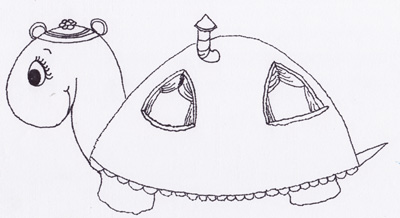
Time n Energy Consumption with Dementia Symptoms

819 blog 20150719a 2in100ppi

Tru here.  I think people rarely consider the added time and energy consumption from our dementia symptoms.  All the little things really add up to high cost in time and energy.

My toothbrush is in the smaller cup on countertop, but if another toothbrush gets tucked into the same cup … then I cannot remember which is mine.  Or have been known to forget the step of picking up toothbrush and just put whatever is in my hand under water to prepare for toothpaste.  Have used other things for toothpaste.

Shampoo is a problem.  This morning made five trips.  Got upstairs and started water into tub when realized … forgot to go potty.  Got back upstairs, turned on water again and realized forgot towel.  Forgot undies.  Forgot phone for if I need help …  I have a list but keep forgetting to check it.  Am now trying to establish habit of switching bottles from one side of tub to the other when I use them, but if I forget:  My hair is wet but did I shampoo, did I put on conditioner/detangler?  — so I do it all again.  This happens very frequently.

Unless I can see the options for dressing, I seldom remember that I own other clothes.  Sometimes I will look in closet and sometimes drawers, but it usually takes a while to remember that I have whichever other option that I did not go to first, when looking for what clothes to wear for the day.  May remember I have a certain piece of clothing but cannot remember where to find it.  If not in closet or drawers, then maybe I wore it already and is it in laundry … or dryer? Maybe I forgot and it is in the box for things that need mending?  Decisions take much longer.  Another problem is dressing for one set of expectations then told that is not what is going on today so get stuck trying to find clothing applicable for the new activities, but again so difficult making those choices.

I’ve been wearing my hair in the same style most every day, but some days it just doesn’t “click” and I am stuck looking at mirror with comb in hand.  I know that I want it to look “normal”; like it does every day.  But cannot remember how to get it that way.  Some days I can even get stuck looking for my brush.  I know that it belongs somewhere in this vanity, but cannot remember which drawer …  so need to look thru every drawer to find it.  The same is true for every tool that is not in sight.

Next comes getting coffee.  I now have a motel-sized coffee pot and motel pre-measured packets of coffee grounds, but sometimes I forget to put in either the water or the coffee packet.  Only once have I dumped water all over from not noticing that there was already water in the canister.  (( Well … only once that I remember LOL ))

… And the problems with faucet handle and the kitchen sink (( see “distorted-decision-making-in-kitchen” )) pitcher 2in150ppi

We won’t even discuss breakfast.

When dealing with dementia symptoms, getting ready for the day can consume much more time and energy than we or our loved ones are prepared for.  It can also cause tremendous inner turmoil of emotions, and trying to deal with our emotions in a healthy way consumes EXTRA energy.  So please allow plenty of time for the “normal” problems of getting ready for the day, when dealing with dementia symptoms.  That alone can lower our frustration levels.  Thank you.

PS:  This is also something most people do not think of when it comes to the issue of person working at a job, while dealing with dementia symptoms at the same time.  Since almost EVERY activity for life consumes so much more time and energy, if trying to hold down a job at the same time … how much time and energy is left for family and loved ones … or dementia peer interaction, in order to stay emotionally healthy while dealing with those extra problems of life?


* Admin issues: SHARE dementia awareness thru buttons below. Feel free to leave your thoughts in the form of comments, but please filter your comments with truthful loving kindness to all concerned. If interested in receiving notice of future blog postings, subscriptions are available through a “follow” button in the upper left corner (MS Explorer) or lower right (Safari, Mozilla Firefox and Chrome). If there is an advertisement below, I have no control over what is shown. Full legal name Truthful Loving Kindness copyright on 2015-07/19.  This is one of the quickest blogs I have written; spent only 3 hrs on written portion of this project.
MyFreeCopyright.com Registered & Protected

alzheimers best blogs badge
Healthline

July Pages by others with Dementia Symptoms Part 1

 819 Blog 20150714a 2in150ppi

These are newest pages that I have posted from persons with dementia symptoms
who have shared their lived experience thru words or projects.
(I add the word “symptoms” because not everyone uses the same vocabulary;
my collections include pages from those with diagnosis of
Mild Cognitive Impairment as well as Alzheimers, Lewy Body, Vascular and other types of “dementia”)

I thank each of you for your generosity of letting the public into your private world !
My hope is that your perspectives can be applied to help and encourage
other patients, care-partners, and professionals.


Several projects this month, and there are some cross-over articles which are also posted at Dementia Mentors,
so check out the others that might NOT have been posted here !
https://www.dementiamentors.org/


Suggest Right-click the TEXT in between the arrows, and “open-in-new-tab”,
which allows you to return to your original page, by clicking tab at top of window.

 616 DebLawhorn paintg 20150708a 3in150ppi

…  New page with Debbie Lawhorn’s second water-color painting at:

>> https://truthfulkindness.com/index-persons-with-dementia-pwd/debbie-lawhorn/july-2015/


616 DonnaLynn ph20150712a 4in120ppi

…  New page from DonnaLynn Morin with photo and “This Disease has Changed Me”

>> https://truthfulkindness.com/index-persons-with-dementia-pwd/donnalynn-morin/july-2015/


616 HarryUrban pic 201505

…  My most recent favorites from Harry Urban at:

>> https://truthfulkindness.com/index-persons-with-dementia-pwd/harry-urban/july-2015-a/


616 Jim Pf pic 20150318

…  New page from Jim Pfefferkorn with his “Musical Memories”:

>>  https://truthfulkindness.com/index-persons-with-dementia-pwd/jim-pfefferkorn/july-2015/

and  … New page from Linda Pendergrass with poem “The Dementia”:

>> https://truthfulkindness.com/index-persons-with-dementia-pwd/jean-lyon/june-2015/  <<


* Admin issues: SHARE dementia awareness thru buttons below.  Feel free to leave your thoughts in the form of comments, but please filter your comments with truthful loving kindness to all concerned.  If interested in receiving notice of future blog postings, subscriptions are available through a “follow” button in the upper left corner (MS Explorer) or lower right (Safari, Mozilla Firefox and Chrome).  If there is an advertisement below, I have no control over what is shown.  Full legal name Truthful Loving Kindness copyright on 2015-07/14.
MyFreeCopyright.com Registered & Protected

alzheimers best blogs badge
Healthline

Feeling Left Out with Dementia Symptoms

819 blog 20150707a 4in150ppi


Tru here.  I was asked to think about what phrases and actions leave Persons With Dementia symptoms feeling left out.
This must be prefaced by reminder that there are a lot of similarities between experiences and perspectives of different Persons With Dementia — but there are also a lot of differences.  Even the same exact severity of the same exact symptoms may bring different feelings in different persons due to different personal history and perspective.  At this time I am only addressing my own individual perspective, as a person living with dementia symptoms; my current clinical diagnosis is “Mild” cognitive impairment (and specialist said must keep close eye on me because I already have quite a few Lewy Body Dementia symptoms).

  • UPDATE 2015-Dec: I neglected to check dictionary definitions before making this posting.  Sorry; poor preparation.  I have left most of entry below these notations as it was originally posted but … after further research I have come to these conclusions:
  • Lack of shared meaning for vocabulary facilitates mis-understandings instead of promoting unity.
  • I am still offended by plenty of terms, but realize that most often it is due to my own narrow definition of those terms; hard time getting past some aspects for the term “care”; In my mind “care” is still limited to consideration and kindness.  To have someone else identified as my “care-giver” implies to me that I am no longer able to give consideration and kindness.  Even tho I am not alone in this mis-perception, I need to realize that it is my own problem – due to my own narrow definition of the term.  Strongly objected to term “victim” in this context — until I looked it up in dictionary.  But again I had a narrowed definition which was corrected by the dictionary; second point in Merriam-Webster is “an individual injured or killed (as by disease, violence, or disaster)”.  I suspect a dementia brain is an injured brain.  oh well.  I feel that it is my problem to deal with my own misperceptions of language, not all of humanity’s responsibility to comply with my own narrow definitions.  I also have problems with becoming a “consumer” and a “user” but recognize that when used as transitive verb (with subject included) they can actually be quite appropriate.  It is much easier for me to get past the sting tho if grammatical subject is so close as to be hyphenated with the verbs (ie service-user or service-consumer).

…   ***   …   ***   …

PHRASES

Oftentimes the negative phrases create resistance to acknowledge dementia within self or to share with others,
because of embarrassment and belittlement.

 Phrases that exaggerate my symptoms:

  •  “care-giver”vs “care-partner” (Please see update at top of blog entry); (as if I no longer have the ability to give gift of “care”; instead now I will always be the receiver?);   Actually, both partners need to cooperate in order for efforts to be successful, so instead of “care-giver”, try “care-partner” or “care-assistant”.
  •  “service-user” (Please see update at top of blog entry); (as if I no longer have the ability to be of “service” to others)  In reality each of us receives and gives to others.  Could be “Person With Dementia”, or “Dementia patient” or “client”.
  •  “consumer”; (Please see update at top of blog entry); (am I only an absorber — consuming the efforts of others?)  As above, each of us receives and gives.
  •  “demented”, (I personally feel this term has been too distorted for use) Instead please use “Person With Dementia”.
  •  “Victim”; (Please see update at top of blog entry)  Dementia does not victimize a person.  Poor levels of care, elder abuse, and disrespect victimizes a person.  I have spent years avoiding a “victim mentality”.  There is no alternate language for “victim”.  Just don’t use it.
  •  “Empty shell”, “Fading away”, “Not all there”, etc (No alternatives = discard these demeaning terms !!!)

Phrases that minimize (invalidate) my symptoms:
(These are usually said in efforts to make me feel LESS alone, but they have the opposite effect because folks do not notice the difference in frequency or severity.)

  •  “I often forget where things are too.”
  •  “I can’t find my words either … but we are just getting older.”
  • “You don’t (look/sound/write) like you have dementia.”  The cognitive swiss-cheese of each patient is different.  Just because there are huge holes from missing cognitive abilities does not prevent the remaining cheese (abilities) from having good nutrients, texture, and taste.  My reading comprehension is down to fourth grade, and yet writing is mostly intact.  Instead try “You are looking well today” or “You sound vibrant”.

Phrases that ignore my symptoms: (often because speaker has not invested time/energy in discovering what to expect)

  •  “Please leave your name, phone number, date of birth, brief description for your call, along with the best time to call … after the beep”  Personally, I am only able to leave my name and number; with all the extra directions I will probably get flustered and forget to leave my phone number
  •  “Just take this home and read it”; Will I understand it? Will I remember what to do with the information?  … But be assured I will probably lose the paper.
  •  “But this was important so of course you remember when __.”  Just because something is/was important doesn’t mean that I am more likely to retain memory of it.  My dementia doesn’t seem to work like that.
  •  “Can you introduce your friend?”  I may not remember if I have already introduced them, and probably don’t remember their name.  So step up, reach out your hand, and introduce yourself.
  • Instead consider that an ever-increasing percentage of people have symptoms of dementia.  Please invest the time and energy to find out reasonable expectations.

Phrases that minimize (or ignore) my life-expectations:

  •  Instead of “I think you are getting better” try, “It seems today is a good day.”
  •  “We will come visit next year instead.”  — In past 2yrs I lost a lot of abilities to have people around …  so what will another year bring in my ability to handle noise and moving bodies?  Visit As Soon As Possible (and as often as possible) because with some people (like my grandmother) those frequent visits later made all the difference in the world.
  • “You can always have another try at it.”  Depending on how often this event occurs, this may have been the last time I will have the abilities to attempt the challenge.  There is not always a “next time”.  Instead say “You gave it your best efforts.”
  •   “It will be okay.”  — in whose book?  How is this “okay”?  Instead try “I am not angry”, “we are here for you”, “this is a hard time for all of us, but we love you”  … and remember that body language is often a much bigger deal for us than the words that come out of your mouth.  Touch a hand or shoulder  — or simply sit quietly nearby.

ACTIONS

Actions that exaggerate my symptoms:

  •  Ignoring my words and only listening to my partner’s words.  Extend courtesy of talking to me directly, slowly, and pausing between phrases and sentences.  Take the time to listen and evaluate what I have to say.
  •  Assuming that since I forget things, most anything that I DO remember is incorrect.  (Again apply the cognitive swiss-cheese concept listed above.)  Please keep in mind that a different recollection of what happened is not necessarily wrong.  — It is just different.
  •  Not investigating the possibility that this was actual bugs instead of one of my hallucinations.  Take the time to listen, evaluate and investigate when I ask, “Are those bugs?”, “Is there music in the attic?”, “Someone is talking in the kitchen,” or “I smell something hot and smoldering.”

Actions that ignore my symptoms:

  •  Ignoring my efforts to interrupt. — by the time there is a break in conversation I will have forgotten.  So allow me to interrupt — before I forget what I wanted to say.
  •  Repeating a question when I told you that I do not have ability to answer it.
  •  Continue explanation when I told you it is not working and I am getting more confused.
  • Continuing to talk fast, without pause between sentences, after I asked you to slow down.

Actions that exaggerate my “different-ness” or “alone-ness“:

  • Playing the quiz-game of “Who can remember”.  But if you talk about the events and reminisce, it might trigger memories.
  • Spending ALL the time talking about activities that I crave … but have no hope of ever sharing.
  • Assuming that if I cannot remember your name then I do not consider you important in my life.  Five of our closest friends were here day before yesterday, but I could not retrieve several names.  So please remember that name and person are not the same thing.  Allow me the work-around of saying that you are very important to me and my day would lose value without you in it, but I still cant remember your name.

All of these situations involve showing respect, embracing who the person is, and meeting them at their varied ability levels (because some aspects of abilities are still very high, and some quite low).  If you have contributory thoughts, then please leave them as comment.  Thank you.


* Admin issues: SHARE dementia awareness thru buttons below. Feel free to leave your thoughts in the form of comments, but please filter your comments with truthful loving kindness to all concerned. If interested in receiving notice of future blog postings, subscriptions are available through a “follow” button in the upper left corner (MS Explorer) or lower right (Safari, Mozilla Firefox and Chrome). If there is an advertisement below, I have no control over what is shown. Full legal name Truthful Loving Kindness copyright on 2015-07/06.  Spent 7.5 hrs on written portion of this project.
MyFreeCopyright.com Registered & Protected

alzheimers best blogs badge
Healthline

June Pages by others with Dementia Symptoms Part 2

819 Blog 20150629a 3in150ppi

These are newest pages that I have posted from persons with dementia symptoms
who have shared their lived experience thru words or projects.
(I add the word “symptoms” because not everyone uses the same vocabulary;
my collections include pages from those with diagnosis of
Mild Cognitive Impairment as well as Alzheimers, Lewy Body, Vascular and other types of “dementia”)

I thank each of you for your generosity of letting the public into your private world !
My hope is that your perspectives can be applied to help and encourage
other patients, care-partners, and professionals.

Suggest Right-click the TEXT in between the arrows, and “open-in-new-tab”,
which allows you to return to your original page, by clicking tab at top of window.

 616 DavidKramer 20150524a 2in200ppi… New page from retired doctor David Kramer with part of his diagnosis story at:

>> https://truthfulkindness.com/index-persons-with-dementia-pwd/david-kramer/june-2015/ <<

… New page from Karen Francis titled “Today is Sunday Funday”

>> https://truthfulkindness.com/index-persons-with-dementia-pwd/karen-francis/june-2015/ <<

616 PaulanGordon Pic 20130316a 2in200ppi…  New page with reactions to book and movie “Still Alice” from Paulan Gordon at:

>> https://truthfulkindness.com/index-persons-with-dementia-pwd/paulan-gordon/june-2015/ <<

616 CecilRistow Embr House Elf 20150628b 4in100ppi…  New page from Cecil Ristow with “Where Does It Go” along with a couple projects at:

>> https://truthfulkindness.com/index-persons-with-dementia-pwd/cecil-ristow/june-2015/  <<

616 Jean Lyon Gardn 20150628a 4in150ppi… New page from Jean Lyon; “Give it a Try” including photos of projects at:

>> https://truthfulkindness.com/index-persons-with-dementia-pwd/jean-lyon/june-2015/  <<

616 DonnaLynn Morin pic 2012 aftr diagn…  New page with photo project “Beginning a New Day of Wonder” from DonnaLynn Morin at:

>> https://truthfulkindness.com/index-persons-with-dementia-pwd/donnalynn-morin/june-2015/  <<


* Admin issues: SHARE dementia awareness thru buttons below.  Feel free to leave your thoughts in the form of comments, but please filter your comments with truthful loving kindness to all concerned.  If interested in receiving notice of future blog postings, subscriptions are available through a “follow” button in the upper left corner (MS Explorer) or lower right (Safari, Mozilla Firefox and Chrome).  If there is an advertisement below, I have no control over what is shown.  Full legal name Truthful Loving Kindness copyright on 2015-06/29.
MyFreeCopyright.com Registered & Protected

alzheimers best blogs badge
Healthline

Impact of Example

Photo below: My Great-Grandmother meets first great-great-grandchild (6 months before death with dementia)
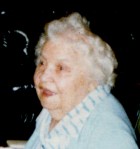
Tru here.  How much of the way I have handled my multiple diagnoses and dys-Abilities have been influenced by living in extended family, and watching how my family members handled their physical and cognitive challenges?


GREAT-GRANDMOTHER Leota: 

I think I was six years old when my 71-year-old great grandmother became unable to live independently, and began living with us for months at a time.

We didn’t know she had the early stages of dementia.  We didn’t know why she acted the way she did.  It created havoc in our house, however we kept trying.

Great-grandma showed us love and we showed her love … and we all kept trying year after year of her long visits.

It would have been so much better
if there was such a thing as a diagnosis of early-stage dementia at that time,
… if we could have learned what the symptoms were
and what reasonable expectations were,
in order to avoid unreasonable expectations.

Instead there were many many misunderstandings
and false accusations.

By seven years later we knew more what to expect, altho we still did not understand why.

I was about twelve years old when Great-grandma asked if I wanted to travel with her to Canada.  She recognized her own cognitive problems, so she knew she would have difficulty traveling on her own.  I was young enough that I don’t remember much of the trip, but I remember my surprise when she got lost in the bathroom at the airport.

Great-grandma out-lived two husbands and her three children.  She died at 87 years old, when I was 21 years old.

But she taught me persistence;
If one way doesn’t work then you try another way …
and you KEEP on trying new ways
until you find one
that enables you to complete what is necessary. 

Pick your priorities.
If it is important … then you never give up.

Remembering family dynamics of extended family setting demonstrates how very important it is for those around me to recognize and accept the diagnosis … instead of trying to fit me into the “normal” box  … where I continually fail to meet expectations.

She taught me that just because you forget a name doesn’t mean you panic.
Relax; You have not forgotten the essence of the person,

and how important that person is to you. 

She taught me how to keep on keeping on
despite dementia symptoms.

.*.

.
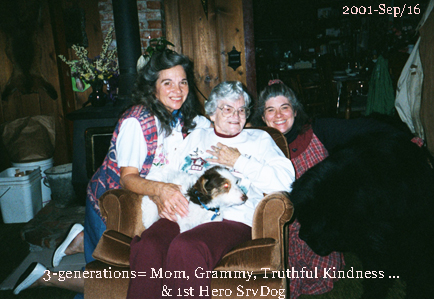
.Photo above: Mom had gone from part-time to full-time live-in care-partner, helping Grammy cope with dementia symptoms (altho Grammy had not yet received diagnosis).  I had recently received Social Security Disability for both physical and cognitive dys-Ability, and was visiting several weeks.  i introduced my first service dog, Hero (the first “Hero, Service Dog”).   He pulled my wheelchair, but you can see i am steadying myself by holding my arm over his back.

.

… and then my GRANDMA Erma: 

Grammy’s very first symptoms began close to the same year my great-grandmother died, but they were assigned to depression.  Symptoms came and went thru the years, but it took many years before they were finally diagnosed as dementia.

Grammy’s challenges with dementia emphasized that the person’s essence remains.

She did not recognize her reflection in the mirror, but
her character of unselfishness,
… of time and energy investment in the lives of others,
was consistently reflected.

Her coping strategies changed
and her emotions sometimes became hard to manage,
but her essence remained.

Spending time with Grammy taught the importance of routine.
She taught me the impact of consistent FREQUENT physical contact with those we love. 

And Grammy taught me that there is a LANGUAGE of touch.

.*.

.

Photo above was during Dad’s sick time to recover from cancer surgery.
We bought a travel trailer and took our first “vacation”.
I was definitely a “daddy’s girl”, and 13yo.

my FATHER RaMon: 

I was thirteen years old when Dad got cancer and was given two percent chance of life.
He died of cancer fifteen years later, when I was 28 years old.

I gained tremendous perspective by watching the way he lived those 15 years.
His battle taught the importance of transparent communication with Creator, self, and those we love.
I learned physical impact of a positive attitude and faith,

… and i learned PERSPECTIVE;
the priority of keeping personal circumstances within a larger perspective of family and community.

.

It is not all about me, but despite my challenges and limitations I CAN make a difference in the world around me.

As persons with dementia dys-Abilities, I think it is important to put our symptoms and challenges into a larger perspective.  How many children, grandchildren, or others watching us now, will be dealing with these same symptoms in future years?

What will my own children and grandchildren learn from the way I handle my symptoms and challenges?
What can I do now
to ensure they are positive productive lessons
…  instead of bitterness and fear?

.

* Admin issues: SHARE dementia awareness thru buttons below. Feel free to leave your thoughts in the form of comments, but please filter your comments with truthful loving kindness to all concerned. If interested in receiving notice of future blog postings, subscriptions are available through a “follow” button in the upper left corner (MS Explorer) or lower right (Safari, Mozilla Firefox and Chrome). If there is an advertisement below, I have no control over what is shown. Full legal name Truthful Loving Kindness copyright on 2015-06/23.
MyFreeCopyright.com Registered & Protected

alzheimers best blogs badge
Healthline

June Pages by others with Dementia Symptoms Part 1

So far this month I have posted pages from the following persons with dementia SYMPTOMS who have shared their lived experience thru words or projects.
Thank you so very much for your generosity of letting the public into your private world !
My hope is that your perspectives can be applied to help and encourage other patients, care-partners, and professionals.

Suggest Right-click and “open-in-new-tab”, which allows you to return to your original page, by clicking tab at top of window.

616 CJ Jaggers w Linda 20150612 … New page from Charles Jaggers with his diagnosis story at:

https://truthfulkindness.com/index-persons-with-dementia-pwd/cj-jaggers/june-2015/

616 GordS Blog20150615d 3in200ppi

…  New photo project from Gord Settle with “Back Home from Trip South” at:

https://truthfulkindness.com/index-persons-with-dementia-pwd/gord-settle/june-2015/

616 HarryUrban pic 201505

…  New page with my favorites from Harry Urban’s blog at:

https://truthfulkindness.com/index-persons-with-dementia-pwd/harry-urban/june-2015/


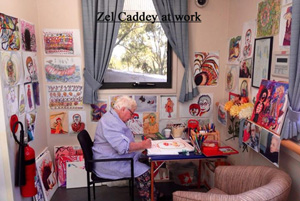
616 ZelCaddey atWork 3in100ppi  …  New art projects from Zel Caddey at:

https://truthfulkindness.com/index-persons-with-dementia-pwd/zel-caddey/june-2015/

* Admin issues: SHARE dementia awareness thru buttons below.  Feel free to leave your thoughts in the form of comments, but please filter your comments with truthful loving kindness to all concerned.  If interested in receiving notice of future blog postings, subscriptions are available through a “follow” button in the upper left corner (MS Explorer) or lower right (Safari, Mozilla Firefox and Chrome).  If there is an advertisement below, I have no control over what is shown.  Full legal name Truthful Loving Kindness copyright on 2015-06/15.
MyFreeCopyright.com Registered & Protected

alzheimers best blogs badge
Healthline

Self-Identity; Am I Still Me

819 Blog 20150618a 11in080ppi

Tru here.  One of the things I appreciated most about the movie “Still Alice” was simply the title.  Recently I was asked about this feeling of inner conflict; “Am I Still Me?”

I consider this a communication issue; communication with self or self-identity.  While I am definitely not a professional, I have experience with my disabilities.  The more my disabilities advanced, the more often I felt like I was the “stand-in” actress trying to “stand-in” for the person I was before disability.

So often, perception of who a person is (and often our perception of self) is dependent on actions; what they (or we) SAY and DO, both negative and positive.  But, with our constantly changing cognitive dis-Abilities, those activities are constantly changing … and we do not feel like the same person.  Hopefully we will discover other activities to enjoy and feel are of value to the world around us, helping to partially fill the empty hole from activities we can no longer take part in.  Another aspect is the frustration, anger, and fear caused from experiencing these symptoms, and from the need to prepare our surroundings and our family (structurally, financially and emotionally) for the expected future.

It seems to me that the more severe the dis-Abilities become, the greater this inner conflict of self-identity.  That is why it bothers me so very much when folks say “but she is mostly gone now” or some of the other phrases.  ((grr-r-r-r))  The abilities change, the interests change, and the emotions change, but this also happens as each child becomes an adult.  Then, when our impulse/decision filter is dissolving it can create drastic differences in behavior from inability to think things thru before we say or do them.  In earlier years, the process of “is this really what I want to say or do right now” and “is this appropriate given the larger perspective” was automatic – I didn’t even think about it.  But when losing impulse filter that ability is disappearing.  All this creates huge holes of inconsistency in our sense of self.

Ballroom dance was a big part of my life and our family taught dance while I was growing up, so that was a big huge hole during the 10 years when I was living from a wheelchair.  Reading was a big part of my life and my sixth grade teacher visited our home to discuss his concerns that I only lived my life thru books — but now my reading comprehension is down to fourth grade and I cannot even understand what I myself write.  This is a very big hole for me as a “bookworm”.  I was a trustworthy keeper of secrets — until lately.  Now if you don’t want me to spill the beans then don’t put them in the pot, because I may not have the filter in order to keep the secrets from overflowing.  Now, what goes in my mind all too often comes out my mouth just about immediately.

We all change — but we do not become a different person.  The facets of our character are reflected differently with the changing phases, abilities, frustrations, angers and fears, but we are at our basic essence the SAME person — with different aspects emphasized.  In my own life that was a very important hurdle, and actually I think recalling some of the exercises during theatre training helped me to finally leap over that hurdle and advance with self-understanding.  Analyzing my theatre characters taught me that the roots of the character remain — if you look hard enough.

* Admin issues: SHARE dementia awareness thru buttons below. If interested in receiving notice of future blog postings there is a “follow” button in the upper left corner (MS Explorer) or lower right (Safari and Chrome). Feel free to leave your thoughts in the form of comments, but please filter your comments with truthful loving kindness to all concerned. If there is an advertisement below, I have no control over what is shown. — Full legal name Truthful Loving Kindness copyright on 2015-06/07.

MyFreeCopyright.com Registered & Protected

alzheimers best blogs badge
Healthline

May Pages by others with Dementia Symptoms

616 Blog 20150529a 3in150ppi 

Tru here.  Since there has recently been hot debate about who has the right to call themselves “PWD” (Persons With Dementia); in what level of diagnosis is necessary to wear this label, and how often patient must be re-examined in order to retain the label  — and ALSO Medical vocabulary changes — that I am beginning to eliminate the “PWD” label from by own vocabulary.

I will NOT go to each one of my friends who have dementia symptoms with the need to discuss diagnosis issues, especially with the recent changes in terminology and definitions.  Instead I will attempt to change my own phrasing, titles, and pictures, in both blog and newsletter, with efforts to minimize misunderstandings.  But this will take time, so please show patience, but also do not be surprised at the changes.

Splintered doctor opinions have no place in the sharing from lived experience of SYMPTOMS.
So that is how I shall try to remember to phrase it; Persons With Dementia SYMPTOMS.

So far this month I have posted pages from the following persons with dementia SYMPTOMS who have shared their lived experience.  Thank you so very much for your generosity of letting the public into your private world !  My hope is that your words can be applied to help and encourage other patients, care-partners, and professionals.

616 CecilRistow PCA Pic3a 2in200ppi … New page from Cecil Ristow with his PCA Presentation at:

https://truthfulkindness.com/index-persons-with-dementia-pwd/cecil-ristow/

616 DavidKramer 20150524a 2in200ppi …  New page from David Kramer with first installment of “FAQ” regarding his diagnosis at:

https://truthfulkindness.com/index-persons-with-dementia-pwd/david-kramer/

616 HarryUrban pic 201505  …  New page with my favorites from Harry Urban’s blog at:

https://truthfulkindness.com/index-persons-with-dementia-pwd/harry-urban/

616 JanPitts Pic wPermssn 20150525  …  New page from Janet Pitts regarding her presentation in Geneva at:

https://truthfulkindness.com/index-persons-with-dementia-pwd/janet-pitts/

616 KevinSmiley 20150526a 2in200ppi  …  Two new pages from Kevin Smiley at:

https://truthfulkindness.com/index-persons-with-dementia-pwd/kevin-smiley/

616 MaxMcC 20150519a 2in200ppi  …  New page from Max McCormick with her fairy garden project at

https://truthfulkindness.com/index-persons-with-dementia-pwd/max-mccormick/

* Admin issues: SHARE dementia awareness thru buttons below.  Feel free to leave your thoughts in the form of comments, but please filter your comments with truthful loving kindness to all concerned.  If interested in receiving notice of future blog postings, subscriptions are available through a “follow” button in the upper left corner (MS Explorer) or lower right (Safari, Mozilla Firefox and Chrome).  If there is an advertisement below, I have no control over what is shown.  Full legal name Truthful Loving Kindness copyright on 2015-05/29.
MyFreeCopyright.com Registered & Protected

alzheimers best blogs badge
Healthline

Symptom Problems with Overnight Stays or Motel

819 Blog Faucet 20150525a 2in200ppi 

Tru here.  Recently returned from three weeks of overnight stays at various places, and I was asked for suggestions.

Flooring:  Highest priority was carpeting.  Most places we stayed did not create feeling of disorientation from pattern of the carpet, but one place did.  Every time I stepped out of the door to our room I was hit with feeling of the floor moving (no snakes, just movement from pattern).  It was my first experience with this symptom which is not uncommon amongst people with symptoms of Lewy Body Dementia.  We stayed several days and after a few minutes I learned to avoid glancing at the floor.  Each time I first stepped out onto the carpet I forgot, and staggered a bit.  My background in assisting with ballroom dance class stood me in good stead; “Look at your partner and not your feet”.  So I glided along with my canes, and walked like I was dancing.  I think maybe it was a criss-cross pattern on carpeting, but not sure.

Plumbing:  Probably the item that was next in priority was water faucets.  Husband was out and I ran tub until full, waiting for it to get hot — but water was still cold.  Emptied and re-filled tub, this time with sink turned on, hoping hot water would finally get thru all the pipes, but that didn’t work.  Gave up.  I went several days with no ability to take bath or shower because could not remember which way to turn the handle in order to get hot instead of cold water.  It was explained to me, but of course I had forgotten by the next time I tried.   I get it that red is hot, but do you turn handle so red is up, or turn same direction as red dot, or what?  It has only been a problem once before, but it was a huge problem in more than one place on this trip.  At this stage I need sinks and tubs that have two handles; and both handles need to be well-marked.  Additionally, suggest water temperature meets local disability requirements.

Color:  My symptoms are not severe yet, but I know that when they do become severe it would also be important to have color differentiation; floor different color than plumbing fixtures, and garbage bin different color than floor, doors different color than walls, etc.

Grab-Rails:  I don’t ever remember having problem with this, but husband insists that if towel racks are near tub they really should be ADA-approved hand rails securely fastened into studs and strong enough to support a person in case they are used for support bars.  A couple of the motels we stayed at had towel racks pulled partially off the walls.

Electricity:  Rarely does a motel supply either nightlights or electrical outlets that are in appropriate places for nightlights, so I try to always remember to bring nightlights along with an extension cord.  I bring an additional extension cord to use with my breathing machine for sleep apnea (which is another common problem among folks with Lewy Body Dementia symptoms).  This needs an additional extension cord because most motels do not supply an electrical outlet within easy reach of night stand.  In fact the last motel had no night stand at all on my side of bed.  (And actually both my partner and I use machines, so we both need night stands and outlets.)  However, one motel not only had an extension in easy reach but even had it mounted to side of night stand, so that I did not need to crawl on floor to access it.  I suspect it was usually used to charge cell phones, which is brilliant placement since my cell phone doubles as night clock while charging.

Floor Plan:  There was no emergency while we were away, but if there had been I would have had a problem getting out from some of the motels.  Sometimes there were three doors close together; the entrance, the bathroom, and the door to what I assume was a suite.  A few times these became confusing, with me not really knowing which door was the entrance/exit.  A few places have the motel phone numbers and basic information posted on the back of entrance door, and that really helps.  There needs to be something clearly delineating the entrance/exit door.

I think these concepts might make life easier and safer for many people with dementia symptoms.  If I think of more, I will add it here.  If you think of more suggestions for overnight stays, please add as comment.

* Admin issues: SHARE dementia awareness thru buttons below.  Feel free to leave your thoughts in the form of comments, but please filter your comments with truthful loving kindness to all concerned.  If interested in receiving notice of future blog postings, subscriptions are available through a “follow” button in the upper left corner (MS Explorer) or lower right (Safari, Mozilla Firefox and Chrome).  If there is an advertisement below, I have no control over what is shown.  Full legal name Truthful Loving Kindness copyright on 2015-05/25.
MyFreeCopyright.com Registered & Protected

alzheimers best blogs badge
Healthline

Re-Blog of Diagnosis Issues

819 Blog20141010 trtl4in100ppi

Tru here.  2016 Update here >>

https://truthfulkindness.com/2016/11/30/symptom-progression-strategies-2016-dec/

Update 2015-09/18:  My friend Brenda Avadian helped edit article I wrote regarding Mild Cognitive Impairment diagnosis issues.  Article can be found at http://thecaregiversvoice.com/voices-with-dementia/what-the-change-in-diagnosis-from-dementia-to-mci-means/

Update 2015-06/07:  Neurologist said we need to keep a close eye on me because with these symptoms I am at high risk for Lewy Body Dementia.  This week received clinical diagnosis of Mild Cognitive Impairment.  Not a huge surprise since according to “Archives of Neurology”  92% of the patients previously categorized as mild dementia would now be classified as “MCI” with the new definitions. http://healthland.time.com/2012/02/08/why-a-new-definition-of-cognitive-impairment-may-confuse-patients/   .  Several of my friends have been to the neurologist in the past month, and each has been re-classified with MCI (including one “with underlying LBD” and one “with underlying Alzheimers”).  Since my diagnosis issues were highlighted within this month on this blog entry, I am adding this addendum here instead of creating a new blog on the issue.

Update 2015-05/18:  Due to some recent events, my lack of confirmation for dementia diagnosis has become a current issue.
Thought I would re-post my previous blog on the subject, just to make sure there are no current misunderstandings (and for my many new friends).  Current status is STILL pending.  Have had two specialist appointments in past 4 months, and 2 more appointments are currently scheduled.  Yes this is uncomfortable. Part of the discomfort is worry that if I do not yet fit any of their nice neat boxes with CURRENTLY known information on dementia … worry that they might try to push me into some other diagnosis simply to feel good about having a label to put on my symptoms.

Further

If you want to check out some of the other blog items, I suggest the “Crucial” category at the bottom of the blog window.


Diagnosis and Expectations; Originally posted Oct 10, 2014.

Tru here.  Enough added people are following this blog that I thought I would clarify my diagnosis and share my thoughts for the next few months. LONG post!

:
Cognitive symptoms began Feb 1999, and by later that year I was let go at work due to (formally) “inability to meet doctor’s return to work criteria” (and informally; slow task completion).  My employer recommended applying for permanent disability and it was given almost immediately, on the condition that I have no control over the funds received.  (Hard to take within a few months of being Secretary to the Financial Controller of large facility.)  Driver’s License removed 2000, but I contested and after 60 minutes on-the-road driving test was able to get my license back in 2001.  2007 discovered Lyme disease, Babesia, and Celiac, so began intensive treatment which lasted until May 2012 (five years).  Muscular symptoms dramatically improved during this time; I was able to leave wheelchair and begin regular program of walking.  However, cognitive symptoms continued to intensify.  By 2012 my reading comprehension had dropped from University-level to barely sixth grade.  I was having trouble with repeating questions, and not remembering basics like whether I had fed animals or myself.

Doctor’s diagnosis 2012-Jul 23 at 10am: I mentioned my suspicion of permanent progressive dementia.  The doctor agreed.  He had already done appropriate blood tests and MRI, and today he said that whatever kind of dementia this is, it is still at an early stage because my brain is still within normal size range.  He has been my doc for 12 years.

Discussed diagnosis with family and “came out of closet”.  But wanted confirmation from neurologist so the following summer (2013) went to Stanford Dementia Center.  NeuroPsych scores still showed IQ 119, and they did not understand why I was having these symptoms (audio memory in most severe category of brain-damage scale, difficulty with reading comprehension, not recognizing husband’s face, etc.) so suggested I see a psychiatrist.  After 6 appointments in order to be absolutely certain, psychiatrist gave me a clean bill of mental health.  However, since Stanford did not respond to my doctor’s letters of concern, and seemed unwilling to share raw NeuroPsych scores to enable later comparisons, I am not returning to Stanford.

Several symptoms dramatically improved with Aricept in Jan 2014, but after six months mostly declined to pre-Aricept performance levels.  I asked for one of the top specialists for Lewy Body Dementia Association to give a second opinion, but after two months’ wait he turned me down.  I heard some facilities do not see dementia patients with history of Lyme.

Just a couple months ago it was pointed out that I am behind in mammograms.  My doctor gave me the choice of whether I wanted to discontinue these maintenance activities and I said yes.  I deeply appreciate being given this option.

During this year of 2014 I have become increasingly invested in “PWD Perspective”, making public the perspective of Persons With Dementia (PWD).  I have become over-extended in both time and abilities.  Most other aspects of life are being postponed for this goal.  Last night my reading comprehension was probably about 4th grade, and that is scary when so much of my analysis of life is thru writing.  I have not been able to understand my own writing (while I am writing it) for a few months now, so review for editing is impractical.

I must repeat:  I have really conflicting feelings about going thru the diagnostic process again.

Recently told 20-30% Britain autopsy shows improper dementia diagnosis.  Considering the huge value placed on diagnosis, that is a dramatic (forget the appropriate word but similar to …) difference, and I doubt if USA is much better.  Some brain autopsy shows evidence of clinical “dementia” despite no evidence of dementia symptoms before death.  And the opposite is also true with autopsy showing no clinical dementia for patient diagnosed with “dementia” and showing dramatic symptoms.  My theory is that, like many other fields of study, medical science has become very dogmatic about PIECES of fact, all too often seeing those pieces as the whole, which is mostly unknown.  As my husband told me, “No matter what the illness is, splintered opinions from specialists only make it more difficult to get a timely diagnosis.  Please do not let your confusion get caught up by theirs.”

Truly, like the diagnostic status of most of my PWD friends, “fact” of dementia diagnosis is fragile and temporary.  Subject to change if their particular doctor becomes unavailable.  Probably 50% of my PWD friends have at least one doctor who says they do not have dementia, and at least one doctor who says they do.  But I believe all of them have experienced the blood tests and brain scans to rule out other causes.  All that I have talked to have had NeuroPsych testing.  Most have not gone thru elimination for possible Psychiatric causes like I have, but when they need to see a new doctor each is vulnerable to the new assertion, “but you are too young for dementia” and start to revisit the diagnosis issue all over again.

I am currently fed up with the transitory nature of clinical dementia diagnosis.  Doctors don’t seem to recognize how re-evaluation of diagnosis throws patient world into greater chaos.  That is additional chaos thrown onto the already-scrambled symptoms of dementia, and can push some patients to the breaking point.  Both loved ones and doctors need to carefully consider factor that PWD has already been on this roller coaster for years.  It is exhausting.

Have you ever thought you saw a loved one after they were dead?  Your heart skipped a beat then rose on wings … only to crash in the dust.  Or vivid dream where their death was just a nightmare and you are so relieved that the nightmare is over, and enjoying them in your life again.  You wake and renew the grief process.

Each re-evaluation of dementia diagnosis does that to patient, because dementia diagnosis is notification of terminal illness with a certain “normal” route.  To maximize preparation for living well in those circumstances, you are spending both time and money on things that you would otherwise spend on completely different priorities for a “normal” life.  MAYBE I can get my life back, then I could do this.  I could do that.  The longer you are in limbo the more hopes are raised, despite conscious efforts to keep expectations within realm of reality.  Maybe I should not give this project away because if these dementia symptoms are temporary then I could finish writing it.  I could finish embroidering it.  I could finish sewing it.  I could go back to work and make money in order to maybe fulfill this other wish.  Oh … if so then …  And we are back on the roller-coaster again!

On the one side there is the wonderful opportunity to exploit this window of time when we can communicate with world and bring awareness that patient has life after “diagnosis” then window is slammed shut and we were inaccurate in premise of all communications.  … until later re-diagnosis is re-installed on the down-swing of roller coaster, after patient is unable to communicate and doctors discover they were correct in first diagnosis!

In my case I cannot continue these extroverted tasks of world-wide communication while going thru the added chaos.  Due to my increasing time investments with new project of making public the PWD Perspective, time investment doubles every few weeks.

I have been in “over-drive” for months and the last few days have been overwhelming.  I am drowning.  Even with my extra tools, last night’s reading comprehension was about 4th grade level and I am unable to participate in life.  My brain is extra scrambled but at same time trying to make arrangements for yet another series of appointments with new set of doctors, (and I have been thru so very many with my Lyme stuff and now this).

I very much enjoy turtles; the lovely placid creatures who carry secure covering and so easily pull themselves under cover for time of restoration and rejuvenation.  As an introvert my private time is crucial to my well-being and I think it is time for me to pull into my shell and you will not see me for a while.  If you want to check on me I will probably post my current “diagnosis” on the cover of my “shell” (blog at truthfulkindness.com).  After my next blog with pictures of projects from my friends, you won’t see me for a while.  My time will be spent on details of daily life with Creator, self, and loved ones.  Need to establish my new craft room, make curtains for all these windows, and other craft projects which have been put on hold for past 15 years.  My husband hopes there is enough room in my little turtle shell for all my plans.

If someone has spare time and would like to enable publication of PWD Perspective during these months, please contact me at truthfulkindness.com. Other than that, I will post as often as I am able to, while in hibernation.

Original posting on Dx is at https://truthfulkindness.com/2014/10/10/my-diagnosis-expectations/

* Admin issues: SHARE dementia awareness thru buttons below.  Feel free to leave your thoughts in the form of comments, but please filter your comments with truthful loving kindness to all concerned.  If interested in receiving notice of future blog postings, subscriptions are available through a “follow” button in the upper left corner (MS Explorer) or lower right (Safari, Mozilla Firefox and Chrome).  If there is an advertisement below, I have no control over what is shown.  Full legal name Truthful Loving Kindness copyright on 2014-10/10.
MyFreeCopyright.com Registered & Protected

alzheimers best blogs badge
Healthline