
Arts ‘n Crafts with Dementia Symptoms – Cooking Tips

616 blog cookg crmr copy

Tru here.  Example of my cooking prowess from day before yesterday: tried to cook a super simple recipe so what could go wrong?  Cut finger (rather severely because picked up shears that cut bone) from tremors & poor estimate of finger placement when opening mix packet.  Meanwhile knocked liquid to floor and made mess that was running onto new cabinet.  Remembered need to use potholder but forgot HOW.  I know that makes no sense, but I think brain shattered from the other stuff.

Possible TOOLS:

One friend purchased chain-link glove to enable safe cutting despite tremors and distance/depth perception complications.  For her that works a lot better than heavy-duty gloves, which seem more difficult to keep clean and dry.

Possible TECHNIQUES:

Tips from Barry PankhurstWhen I am baking, so that I don’t make any mistakes and forget any of the ingredients, what I do is to:

1. Always have my typed-out recipe in front of me so that I can clearly see it and follow the ingredients list.
2. As I have Alzheimer’s and dementia I now always pre-weigh each of the ingredients into individual dishes and then lay them out in accordance with my recipe list.
3. Then when mixing and making the recipe I can double check and tick that I have all the ingredients correct as I add them into the recipe.
4. In the past when baking products, I could rely on my built-in memory clock to know when products would be baked “BUT  NOW” I have to use a baking alarm timer otherwise I would have to call myself (King Alfred).

As for all my ingredients I have my own very big bakery bench and behind me I have my own ingredients cupboard with everything labeled.  I also have a small bench and rack by the side of my large bench that has all my more bulky ingredients such as the flour and all my cake decorating equipment.  All my other tools are kept underneath my work bench on a shelf.

I also believe and still practice the philosophy that (Everything has its place, and should and must be kept in its place).  In this way it helps prevent any further confusion in my mind.

So to help my mind, it’s all about my preparation first.

***       ***       ***

From Max McCormickI use a lot of the same methods Barry does for cooking.  I line up the ingredients in order on the counter, then move them off to the side or put them away once I’ve used each one.  I also check off the steps on the recipe.  When I have to add more than one of something, like cups of flour, I mark each one with a tally mark on a piece of paper so that I don’t lose track of how much I’ve put in.

***       ***       ***

From Truthful:  In the past I was able to use simple mixes or make-a-mix myself, so that no one project was too complex.  Measuring each ingredient into 1-quart glass measuring cup allowed re-count if lost track of amount.  Alarms ensured power got turned off when done.  CLEAR, well-marked ingredient canisters simplified process of finding my ingredients since often word labels fail to register as ingredient I am looking for.

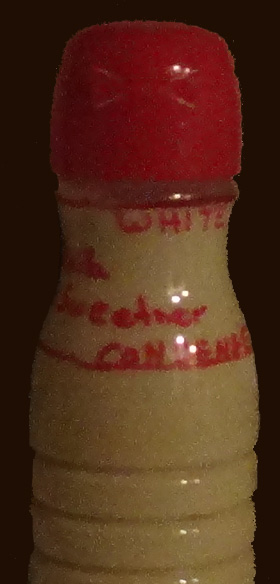
Unfortunately those techniques no longer work for me.  However there are a few things I can still make.  Container pictured above is used to make my creamer.  I put one can of condensed milk into bottle, filling to first red line marked “condensed milk”.  Then between the two red lines says “1/2 tsp vanilla and sweetener” so that goes in next; maybe a squirt of Gourmet Davinci Sugar Free Irish Cream (or English Toffee) Syrup.  Then fill to top red line with “White Almond-Coconut Milk”, as marked.

Shaker for protein drink is also CLEAR container marked for proportion of both wet and dry ingredients.  Then the contest is remembering to close the shaker lid before shaking (where I again messed up this morning, like in my blog of a month ago).

https://truthfulkindness.com/2014/09/09/distorted-decision-making-in-kitchen/

With chocolate protein in shaker cup I pour into CLEAR coffee cup until half full, then fill the rest with coffee (my husband makes) and add creamer.  I have yet to discover successful microwave time estimates other than the one-minute button.  …  I just need to remember not to trust my own estimates because my estimator is obviously broken!
* Admin issues: SHARE dementia awareness thru buttons below. Feel free to leave your thoughts in the form of comments, but please filter your comments with truthful loving kindness to all concerned. I am no longer sending out individual notices of new blogs, so if interested in receiving notice of future blog postings, subscriptions are available through “FOLLOW” button in the upper left corner (MS Explorer) or lower right (Safari, Mozilla Firefox and Chrome). If there is an advertisement below, I have no control over what is shown.  — Full legal name Truthful Loving Kindness copyright 2014-10/28.
// <![CDATA[
(function () { document.write(“”);} () )
// ]]>

MyFreeCopyright.com Registered & Protected
alzheimers best blogs badge
Healthline

Dementia Sundowning Concepts from Karen Francis

SunDng frm KarenF 6in300ppi
Ideas about “Sundowning” from PWD Karen Francis, friend who worked with memory impaired before becoming impaired herself:

What is Sundowning?

SUNDOWNING – Sundowning is a phenomenon that is associated with increased confusion resulting in a variety of behaviors that you may not see other times of the day. It can happen with any form of dementia. Up to about 50% of persons diagnosed with some form of dementia may experience sundowning. I have my own personal theories about why it happens when it does. Keep in mind that for each person, sundowning may occur at different times of the day – it’s called sundowning because it happens later in the day for a lot of people.

Some of the symptoms exhibited are:
*Anxiety
*Increased confusion
*Crying
*Agitation
*”Exit seeking” (wanting to leave or go home-even if they are home)

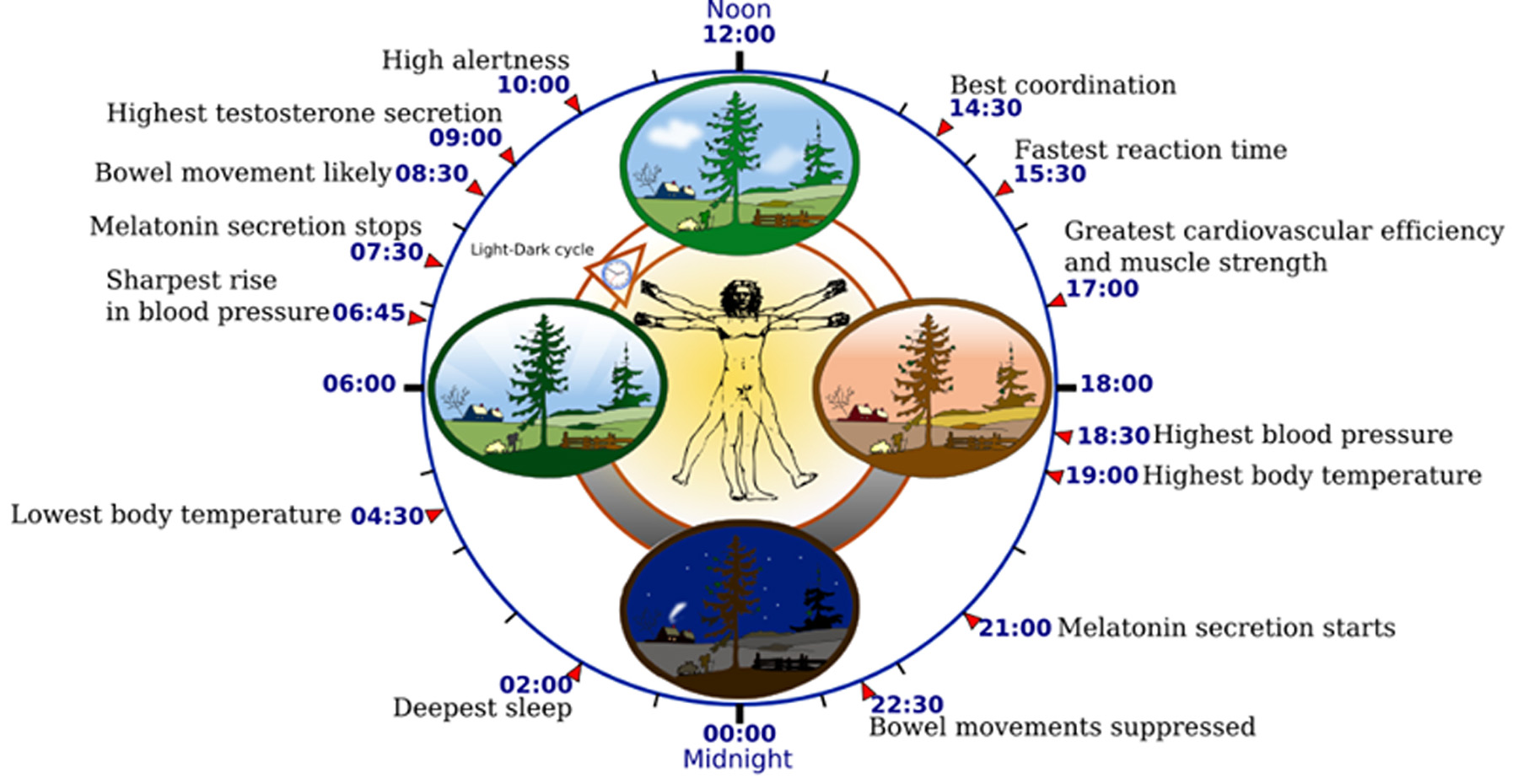
The specific cause for sundowning has never been proven. Many studies have suggested that this phenomenon happens because of a disturbance in the circadian rhythm or a “built-in clock”.Which means activity and behaviors are triggered by time of day, amount of daylight, change in season, full moon (and if you have never been in a memory care unit around dinner time during full moon, you don’t know what you are missing!) My co-workers and I always knew when it was full moon by observing behaviors without looking out the window!). Plants, other animals and creatures have been observed to be affected by a circadian rhythm.

Here’s my own personal observations, thoughts on sundowning and theory, based on my years of working with the memory impaired.

* For some, especially in a facility, I don’t always consider the behaviors exhibited around dinner time “sundowning” but rather a result of a day full of activities, visitors, visit with the doctor – simply over-stimulation and the need for a “time out” of spending a bit of time earlier in the afternoon (before the sundowning typically starts) simply relaxing – smaller groups, soft light, soft music, maybe a hand massage with some lavendar lotion. While facilities have great intentions in providing a full activity schedule, it may be too much for some. At home it may be over-stimulation or just a need to slow down later in the afternoon – turning off the tv, asking visitors to respect a need to limit time visiting or coming earlier in the day if possible.

Before I give examples, if you have a loved one or someone in your care who sundowns, think about what they did for a living before the disease and what their routine was like. Keeping their former profession and routine in mind, think about what they would have been doing at that time of the day. For someone who has problems with short term memory, as the disease progresses, the only memories that are left are the older memories of their life and routine, going back to when they were in their 30s. 20s, or earlier.

*Everyone experiences sundowning at different times of the day. Here are some examples:
*farmers: A farmer typically starts their day before the sun is even up! I have observed dairy farmers experience sundowning earlier in the day than most. When I look at the biography that I had the family fill out prior to admission and saw what they did for a living and that their day typically started at 3 or 4AM, it made sense to me when they began getting a bit agitated in the early afternoon, even though all their needs were met (they had lunch, perhaps a snack, they were toileted, etc) that 3 or 4 pm was the time of day they would be winding down their day, Moving equipment back in a barn, tending to herd, and after a day in the elements – the sun, the rain, the snow, they were ready for dinner and bed! At times I’d observe my farmer walking in and out of the building, agitated. Could he possibly be thinking, “This isn’t my farm!” “Where are my cows, my corn field, where is my tractor?”

*Housewife: A housewife took care of the home, cooked, cleaned, cared for children, their husband. Think about a routine for someone who had children and who’s responsibilities were to make sure their children came home directly after school, dinner prepared and on the table when their husband was due home. When 4pm rolls around and they can’t find their children (and I have observed ladies asking where their children are), they are supposed to be preparing dinner because their husband will be angry if it’s not on the table. Where are my children? where is my kitchen? At that time of day we would see ladies wandering through the facility, asking for their family, asking what they should do repeatedly, maybe even crying without being able to tell us why

*Office Worker/ Executive: A 9-5 job for some. A commute by bus or train for some to get to and from work. I cared for a gentleman who was a CEO of a major company that flew him around the country and beyond. Since I was almost always in a dress, he thought I was his flight attendant and would ask when his flight to Houston was boarding. For others, around the end of a typical work day, in addition to observing some anxiety, agitation we would hear comments like, “I need to get home”, “Where is my car”, “How do I get to the bus/train station?”

My favorite was the people asking when happy hour starts or gave me their drink order.

When you think about their behavior in those terms, it may be easier to comfort or calm them during that “sundowning” period. For the housewife – let her help set the table, tell her the kids are fine, they’ll be home soon. For the commuter – (we had little indoor porches with benches) take them to a spot to sit and tell them this is the bus/train stop. Bring some other “commuters” to the same sitting area. Hopefully they will begin interacting and they forget why they are sitting there. I’ve heard some interesting comversations at the”bus stop”.

A person who is sundowning may not be able to tell you what is wrong, what they want or need – they may just feel like there is something they should be doing but can’t communicate what that is which is why they are so anxious or agitated or sad.

Whatever the case, whatever the time of the sundowning, the goal is to try to put their mind at ease. Sometimes just slowing the day down for them before dinner and trying some soothing one-to-one attention may be the trick. For some that become very anxious, sad, agitated if all other interventions have been tried and still feeling those unpleasant feelings, perhaps their doctor needs to take a look at their current medications and even though I don’t like to suggest it, I hate more to see someone crying inconsolably, anxious or agitated to the point that they may hurt themselves or others – sometimes an anti-anxiety medication may help. If they have been prescribed an anti-anxiety medication already – look at the tie of day they are getting it. Sometimes it doesn’t mean that something needs to be added but the time of day it is given needs to be changed.

My biggest piece of advice is determine what time of the day they have had heightened anxiety. If it is a fairly consistent time of day (as sundowning usually is) be proactive in toileting them before that magical time of day, find soothing activities that you could engage them in – soft music, looking at a picture book and have them tell you about what they see and what they know and always be impressed by their story! Keep them or get them into a regular routine. Keeping them active throughout the day is important but wind down the level of activity as the day goes on.

The staff at Sacred Heart learns the life history and routine of each and every resident. We understand that sundowning may be an unpleasant time of day for some residents (except the ones looking for happy hour…lol). We have developed a routine that fits for each person. We are great at improvising or redirecting when one of our residents needs to be soothed.

For more information about sundowning, consider attending one of our support groups! Everyone has different experiences and may have better ideas or have found something that works to sooth a person who is sundowning.

Our support group at the Sacred Heart Senior Living in Center Valley is the 2nd Tuesday of each month (please call for time). Our support group at Sacred Heart by the Creek in Northampton is the 3rd Thursday of each month at 6pm.

alzheimers best blogs badge
Healthline

Privacy, Secrets, and My Dementia Symptoms

616 Blog secrets 4in200ppiTru here.  Remember, I can ONLY speak for myself.  Each person needs to decide for themselves on issues like this.  I will be discontinuing the “private” support groups I am member of.  It is just too difficult for me personally to remember who said what, in order to retain that “privacy” aspect.  Secrets have never been something I was comfortable with, and that kind of environment is too much adventure for me now.  Will I remember?  Will I properly associate the information, so as not to interfere with someone’s privacy?  What happens if I mess up?  I tossed and turned last night, wrestling with this problem.  Am I going to violate someone’s confidences because I don’t remember to whom that piece of information belongs, and that it belongs in the “private” category?  NO!!  The consequences are too great for my comfort.

Last year I told my family to leave me out of secrets.  Sooner or later this frontal-lobe filter will fail; that is an accepted part of this path and almost inevitable.  What spills out is controllable only by what gets put into the “do not say” folder for that part of my brain.

The one side of brain holds terms I am having great difficulty accessing because the vocabulary seems to be disappearing, causing my speech to become ever-increasingly halted and full-of-effort.  The other side, which lasts almost until the time of death, holds rhythm, music, songs, … and things I am not supposed to say.  I need to fill it to the brim with music and songs, and make sure the minimum amount of “secrets” are enclosed.

So it is not that I do not enjoy time spent with friends I have developed in these groups.  It is not that I do not value their friendship, I just cannot afford extra stress from the “privacy” aspect of group.  Please feel free to contact me; we can talk about nearly anything (except politics) but if you don’t want me to spill the beans, don’t put them in the pot.

* Admin issues: SHARE dementia awareness thru buttons below. Feel free to leave your thoughts in the form of comments, but please filter your comments with truthful loving kindness to all concerned. I am no longer sending out individual notices of new blogs, so if interested in receiving notice of future blog postings, subscriptions are available through “FOLLOW” button in the upper left corner (MS Explorer) or lower right (Safari, Mozilla Firefox and Chrome). If there is an advertisement below, I have no control over what is shown.  — Full legal name Truthful Loving Kindness copyright 2014-10/20.
(function () { document.write(“”);} () )

MyFreeCopyright.com Registered & Protected
alzheimers best blogs badge
Healthline

More Thoughts on Communication in Early Stages

616 Blog doors 3in100ppi
Tru here.  In the last year or so I don’t communicate one-on-one very well.  It has become strained and costs a lot of energy.

A common dementia symptom is my sound-processing disorder; trying to unscramble numerous connected sounds into words, sentences and thought sequences, in order to understand what someone is telling me costs me a lot more energy than it used to.

Trying to find words best representing my thoughts is no longer second-nature either; it is a lot of work.

I enjoy time spent with you but:

Do not expect sustained conversation with me.  Bring one or two slow-speaking (and slow-moving) friends and you can chat in my presence – letting me just speak up occasionally rather than requiring me to pull one-half of conversation.  Or maybe we could “chat” while doing something else, lessening my burden for carrying a conversation, like while walking, or gathering firewood, or washing dishes even.  Yes, I need to see your mouth moving when you talk, so look at me when speaking, but that gives me something to do so there is not an awkward silence while I try to match some words to the concepts floating around in my head.  We could fold laundry or take a walk outside, put together a puzzle or I could crochet while you work on a different project.

Please continue trying.  Follow my written blog; start when I began in July and then catch up with me.  The thoughts from most deep within me don’t come out of my mouth, they come out of my pen.  I am usually more effective at putting together my thoughts in writing than verbally.  And it is probably the single thing you could do to best learn my current status and learn how best to communicate with me.  My friend’s husband continued to write and draw – longer into his dementia than he continued to speak, and I suspect that may be true of me.

Don’t give up on me.  More and more I believe that what you can see on the outside can often be a poor representation of the “me” that is on the inside.  I need much more “time out”.  I need much more time in composing words and sentences.  …  I need much more time for EVERY thing, which means schedules and priorities must constantly be re-established along with new compensatory tools, in the ever=changing landscape of a dementia journey.  Travel along with me.  Follow my blog.  Since I can no longer notify everyone when new entries are posted, PLEASE subscribe (thru “follow” instructions below) and send to anyone you think might be helped by these words.

Husband says my outside might be medieval broken-down castle, but inside holds beautiful tapestries and gold-inlaid filigree on graceful arched doorways.  I just have difficult time swinging opening the heavy oak doors with their creaking rusty hinges. (( You didn’t believe me earlier when I told you he was rare and irreplaceably romantic, did you ?? LOL ))

* Admin issues: SHARE dementia awareness thru buttons below. Feel free to leave your thoughts in the form of comments, but please filter your comments with truthful loving kindness to all concerned. I am no longer sending out individual notices of new blogs, so if interested in receiving notice of future blog postings, subscriptions are available through “FOLLOW” button  in the upper left corner (MS Explorer) or lower right (Safari, Mozilla Firefox and Chrome).   If there is an advertisement below, I have no control over what is shown.  — Full legal name Truthful Loving Kindness copyright 2014-10/17.
// <![CDATA[
(function () { document.write(“”);} () )
// ]]>

MyFreeCopyright.com Registered & Protected
alzheimers best blogs badge
Healthline

Arts ‘n Crafts after Dementia Diagnosis – Samples

616 blog C20 Color 11in200ppi

No eloquence tonight … just pictures,
which can be clicked on to enlarge.

For those of us who craft, creating can be huge source of energy and motivation.

Above is craft in use of color.  Lauren U’s picture depicts the creatures from the hallucinations which surround her.
Mine is in center, and
Max McCormick’s image wonderfully depicts the effect of “Sensory Overload” as dementia symptom.

616 Blog c20 StdCraft 11in100ppi

…Max said “Since my diagnosis, I’ve tried to think of things that my kids might like to have to remember me.
There’s just something about having something tangible that was made with love.
I hope that I live long enough to have grandchildren, but if not, at least they will be warm in my blankets!”
Ann from Scotland made the gift in center.
Last image is greeting card, again made by Lauren U.
Pictures below are “Doodles” or “Zentangles”

616 Blog C20 DoodleZen 08in100ppi

616 Blog 320 Misc 08in100ppi

…  Above is Norrms performing his craft of public speaking, and me playing with my Nevel Harp.
Below are several pictures of my PWD friends’ craft of creating an environment with plants.

616 Blog C20 Plants 10in100ppi

… Crafting with words, by Kate Swaffer and Chris Roberts

616 Blog C20 Written 06in100ppi

…  Baking and decoration of baked goods is craft of Barry Pankhurst, below.

616 Blog C20 Food 06in072ppi

Next week I hope to bring compensating tools and techniques we use while creating, but I want to be able to gather as much as possible from my friends, so that means it might be longer than one week.
I suspect my next blog will be more on communication (maybe even later tonight) so stay tuned.

 * Admin issues: SHARE dementia awareness thru buttons below.  Feel free to leave your thoughts in the form of comments, but please filter your comments with truthful loving kindness to all concerned.
I am no longer sending out individual notices of new blogs, so if interested in receiving notice of future blog postings, subscriptions are available through “FOLLOW” button
in the upper left corner (MS Explorer) or lower right (Safari, Mozilla Firefox and Chrome).
If there is an advertisement below, I have no control over what is shown.

alzheimers best blogs badge
Healthline

Slipped Further into the Mire

Tru here.  Shaving cream!  I have slipped further and my compensatory tools no longer work.

I was using a matrix to track when I sent Tweets, in order to avoid duplicates and triplicate.  Now I am having too much trouble trying to use Excel that the tool is not helpful.  I am lost in the spreadsheet itself.  Why am I here?  What was I doing?  Instead of every few minutes getting lost, I can’t even get started!

Alarms no longer work because I don’t even know it is my own alarm, and I really don’t care to find out what it wants me to do; I just want the noise to stop.  Alarms have helped for over 5 years, but no longer help now.

Reading aloud no longer helps enough for me to understand sixth grade novels.  It worked for about six months.  I am in the middle of book.  I remember the drawing of bookworm that my sixth grade teacher drew when he visited our home.  Like I said before

this bookworm is running out of books.  (Make that has NOW run out of books.)

Discouraged and tears (having much more problem with words spelled same but different meaning, and words pronounced different but same spelling).  Tears on my face and tears in my dress.  It is much the same feeling.  Is it the same spelling?  Always been very good with spelling but don’t remember now.

Need to re-group and find my new “normal” so that I can gather some new tools.  Oops; did I already write this? (Last month discovered wrote first draft night before and saved, but forgot I wrote it so wrote it again.)  I guess wrote similar blog but three months ago; “My New Normal” at

— 2014-10/12
* Admin issues: SHARE dementia awareness thru buttons below.  Feel free to leave your thoughts in the form of comments, but please filter your comments with truthful loving kindness to all concerned.  If interested in receiving notice of future blog postings, subscriptions are available through a “follow” button in the upper left corner (MS Explorer) or lower right (Safari, Mozilla Firefox and Chrome).  If there is an advertisement below, I have no control over what is shown.  — Full legal name Truthful Loving Kindness copyright 2014-10/12.

MyFreeCopyright.com Registered & Protected

alzheimers best blogs badge
Healthline

My Diagnosis and Expectations

819 Blog20141010 trtl4in100ppi

Tru here.  Enough added people are following this blog that I thought I would clarify my diagnosis and share my thoughts for the next few months. LONG post!  2015 Update here >> https://truthfulkindness.com/2015/05/18/re-blog-diagnosis/  and 2016 Update here >>

https://truthfulkindness.com/2016/11/30/symptom-progression-strategies-2016-dec/

Summary:  My GP and I agree on diagnosis of “dementia” but waiting for confirmation from neurologist.  I have been in “over-drive” for months and the last few days have been overwhelming.  I am drowning.  Even with my extra tools, last night’s reading comprehension was about 4th grade level and I am unable to participate in life.  My brain is extra scrambled but at same time trying to make arrangements for yet another series of appointments with new set of doctors, (and I have been thru so very many with my Lyme stuff and now this).  I have really conflicting feelings about going thru the diagnostic process again.  As my husband told me, “No matter what the illness is, splintered opinions from specialists only make it more difficult to get a timely diagnosis.  Please do not let your confusion get caught up by theirs.”


More detailed explanation:
Cognitive symptoms began Feb 1999, and by later that year I was let go at work due to (formally) “inability to meet doctor’s return to work criteria” (and informally; slow task completion).  My employer recommended applying for permanent disability and it was given almost immediately, on the condition that I have no control over the funds received.  (Hard to take within a few months of being Secretary to the Financial Controller of large facility.)  Driver’s License removed 2000, but I contested and after 60 minutes on-the-road driving test was able to get my license back in 2001.  2007 discovered Lyme disease, Babesia, and Celiac, so began intensive treatment which lasted until May 2012 (five years).  Muscular symptoms dramatically improved during this time; I was able to leave wheelchair and begin regular program of walking.  However, cognitive symptoms continued to intensify.  By 2012 my reading comprehension had dropped from University-level to barely sixth grade.  I was having trouble with repeating questions, and not remembering basics like whether I had fed animals or myself.

Doctor’s diagnosis 2012-Jul 23 at 10am: I mentioned my suspicion of permanent progressive dementia.  The doctor agreed.  He had already done appropriate blood tests and MRI, and today he said that whatever kind of dementia this is, it is still at an early stage because my brain is still within normal size range.  He has been my doc for 12 years.

Discussed diagnosis with family and “came out of closet”.  But wanted confirmation from neurologist so the following summer (2013) went to Stanford Dementia Center.  NeuroPsych scores still showed IQ 119, and they did not understand why I was having these symptoms (audio memory in most severe category of brain-damage scale, difficulty with reading comprehension, not recognizing husband’s face, etc.) so suggested I see a psychiatrist.  After 6 appointments in order to be absolutely certain, psychiatrist gave me a clean bill of mental health.  However, since Stanford did not respond to my doctor’s letters of concern, and seemed unwilling to share raw NeuroPsych scores to enable later comparisons, I am not returning to Stanford.

Several symptoms dramatically improved with Aricept in Jan 2014, but after six months mostly declined to pre-Aricept performance levels.  I asked for one of the top specialists for Lewy Body Dementia Association to give a second opinion, but after two months’ wait he turned me down.  I heard some facilities do not see dementia patients with history of Lyme.

Just a couple months ago it was pointed out that I am behind in mammograms.  My doctor gave me the choice of whether I wanted to discontinue these maintenance activities and I said yes.  I deeply appreciate being given this option.

During this year of 2014 I have become increasingly invested in “PWD Perspective”, making public the perspective of Persons With Dementia (PWD).  I have become over-extended in both time and abilities.  Most other aspects of life are being postponed for this goal.  Last night my reading comprehension was probably about 4th grade, and that is scary when so much of my analysis of life is thru writing.  I have not been able to understand my own writing (while I am writing it) for a few months now, so review for editing is impractical.

I must repeat:  I have really conflicting feelings about going thru the diagnostic process again.

Recently told 20-30% Britain autopsy shows improper dementia diagnosis.  Considering the huge value placed on diagnosis, that is a dramatic (forget the appropriate word but similar to …) difference, and I doubt if USA is much better.  Some brain autopsy shows evidence of clinical “dementia” despite no evidence of dementia symptoms before death.  And the opposite is also true with autopsy showing no clinical dementia for patient diagnosed with “dementia” and showing dramatic symptoms.  My theory is that, like many other fields of study, medical science has become very dogmatic about PIECES of fact, all too often seeing those pieces as the whole, which is mostly unknown.  As my husband told me, “No matter what the illness is, splintered opinions from specialists only make it more difficult to get a timely diagnosis.  Please do not let your confusion get caught up by theirs.”

Truly, like the diagnostic status of most of my PWD friends, “fact” of dementia diagnosis is fragile and temporary.  Subject to change if their particular doctor becomes unavailable.  Probably 50% of my PWD friends have at least one doctor who says they do not have dementia, and at least one doctor who says they do.  But I believe all of them have experienced the blood tests and brain scans to rule out other causes.  All that I have talked to have had NeuroPsych testing.  Most have not gone thru elimination for possible Psychiatric causes like I have, but when they need to see a new doctor each is vulnerable to the new assertion, “but you are too young for dementia” and start to revisit the diagnosis issue all over again.

I am currently fed up with the transitory nature of clinical dementia diagnosis.  Doctors don’t seem to recognize how re-evaluation of diagnosis throws patient world into greater chaos.  That is additional chaos thrown onto the already-scrambled symptoms of dementia, and can push some patients to the breaking point.  Both loved ones and doctors need to carefully consider factor that PWD has already been on this roller coaster for years.  It is exhausting.

Have you ever thought you saw a loved one after they were dead?  Your heart skipped a beat then rose on wings … only to crash in the dust.  Or vivid dream where their death was just a nightmare and you are so relieved that the nightmare is over, and enjoying them in your life again.  You wake and renew the grief process.

Each re-evaluation of dementia diagnosis does that to patient, because dementia diagnosis is notification of terminal illness with a certain “normal” route.  To maximize preparation for living well in those circumstances, you are spending both time and money on things that you would otherwise spend on completely different priorities for a “normal” life.  MAYBE I can get my life back, then I could do this.  I could do that.  The longer you are in limbo the more hopes are raised, despite conscious efforts to keep expectations within realm of reality.  Maybe I should not give this project away because if these dementia symptoms are temporary then I could finish writing it.  I could finish embroidering it.  I could finish sewing it.  I could go back to work and make money in order to maybe fulfill this other wish.  Oh … if so then …  And we are back on the roller-coaster again!

On the one side there is the wonderful opportunity to exploit this window of time when we can communicate with world and bring awareness that patient has life after “diagnosis” then window is slammed shut and we were inaccurate in premise of all communications.  … until later re-diagnosis is re-installed on the down-swing of roller coaster, after patient is unable to communicate and doctors discover they were correct in first diagnosis!

In my case I cannot continue these extroverted tasks of world-wide communication while going thru the added chaos.  Due to my increasing time investments with new project of making public the PWD Perspective, time investment doubles every few weeks.

I have been in “over-drive” for months and the last few days have been overwhelming.  I am drowning.  Even with my extra tools, last night’s reading comprehension was about 4th grade level and I am unable to participate in life.  My brain is extra scrambled but at same time trying to make arrangements for yet another series of appointments with new set of doctors, (and I have been thru so very many with my Lyme stuff and now this).

I very much enjoy turtles; the lovely placid creatures who carry secure covering and so easily pull themselves under cover for time of restoration and rejuvenation.  As an introvert my private time is crucial to my well-being and I think it is time for me to pull into my shell and you will not see me for a while.  If you want to check on me I will probably post my current “diagnosis” on the cover of my “shell” (blog at truthfulkindness.com).  After my next blog with pictures of projects from my friends, you won’t see me for a while.  My time will be spent on details of daily life with Creator, self, and loved ones.  Need to establish my new craft room, make curtains for all these windows, and other craft projects which have been put on hold for past 15 years.  My husband hopes there is enough room in my little turtle shell for all my plans.

If someone has spare time and would like to enable publication of PWD Perspective during these months, please contact me at truthfulkindness.com. Other than that, I will post as often as I am able to, while in hibernation.

* Admin issues: SHARE dementia awareness thru buttons below.  Feel free to leave your thoughts in the form of comments, but please filter your comments with truthful loving kindness to all concerned.  If interested in receiving notice of future blog postings, subscriptions are available through a “follow” button in the upper left corner (MS Explorer) or lower right (Safari, Mozilla Firefox and Chrome).  If there is an advertisement below, I have no control over what is shown.  Full legal name Truthful Loving Kindness copyright on 2014-10/10.
// <![CDATA[
(function () { document.write(“”);} () )
// ]]>

MyFreeCopyright.com Registered & Protected
alzheimers best blogs badge
Healthline

Crafts I Personally Use for Dementia Symptoms

Tru here.  ((Updated 2018 Mar 3))  Remember that any Links are not behind pictures, but in the colored text.

Definition of craft (kr ft) n. 1. Skill in doing or making something, as in the arts; proficiency.  As my introduction prefaced at  >> https://truthfulkindness.com/2014/10/02/arts-crafts-dementia-intro/

I feel most “alive” when I am creating something, so these are some of my tools for feeling alive.

Traditional Styles of “Crafting”:

Craft with pens:  Due to Book “Yoga for your Brain: A Zentangle Workout” by Sandy Steen Bartholomew, I began “Doodle” craft, with sample above.  The procedure creates an almost-meditative state.

Craft with music:  My search for “Pentatonic” instrument, combined with my lifelong research into culture and languages of the ancient scriptures gave me the idea of masking two notes to create a Pentatonic scale on ancient Nevel harp.  Impromptu video (no script or organized “song”) at >> https://www.youtube.com/watch?v=aub51qOyGtQ&feature=youtu.be

2018 update: Now unable to tune the Lap harp, so gift of pentatonic drum.  Beginning at about 7min into presentation, i demonstrate a few notes of my “hapi” drum at >> https://youtu.be/mCB_gnsniCc

Craft with fabric:  Since eventually I will be unable to dress myself, and my husband will be dressing me, I have taken some necessary precautions (LOL).  My husband is very thoughtful, and is one of those rare and irreplaceable romantic men.  He is also extremely creative with woodwork … but … no human is perfect and he is careless with color; it is just not important in his world.  Since color is very important in my world I have limited my wardrobe to only things that can be worn together indiscriminately.  I wear black pant or skirt (gathered waist to enable easy pull-up), black or purple turtleneck, and then I sew decorative printed aprons, collars, and accessories (such as the fabric yo-yos worn in my hair, photo below) to be worn over them for interest & to protect from the spills that are inevitable when I eat.

Craft with yarn: cap, collar, cuffs, etc, meet my need for crafts of shorter time periods.  Altho it can take many tries to get one piece like collar above.  >> https://truthfulkindness.com/2015/09/22/craft-project-week/

Craft with words:  I write to discover what I think about a subject, what I feel about a subject, and what to do.  Consequently my lifetime has been filled with words.  This poster was created for Dementia Mentors in memory of my relationship with my maternal grandmothers and their dementia paths.

Non-Traditional Crafting or Creating:

Create with hair:  In my search for a way to style my hair so that it could be a longer length without added problems for my caregiver as this disease advances, I discovered this hairstyle.  Then I forgot a few times how to do it, so prepared this video >> https://youtu.be/2YBKOOVbuQE

Create with food:  I do very little cooking.  Since I keep forgetting how to make coffee, and have difficulty counting ingredients for recipe without getting distracted and losing count, I can use one of those small coffeemakers with the pre-measured packets like you get at motel.  >> https://truthfulkindness.com/2014/10/28/arts-crafts-dementia-cooking/

Create with plants:  Since I have a “black thumb”, I won’t include any examples of this “craft”.  Next week I hope to have pictures from my friends, and a couple have excellent samples of the craft of creating an environment with plants.  >> https://truthfulkindness.com/2014/10/14/arts-n-crafts-samples/


* Admin issues: SHARE dementia awareness thru buttons below.  Feel free to leave your thoughts in the form of comments, but please filter your comments with truthful loving kindness to all concerned.  If interested in receiving notice of future blog postings, subscriptions are available through a “follow” button in the upper left corner (MS Explorer) or lower right (Safari, Mozilla Firefox and Chrome).  If there is an advertisement below, I have no control over what is shown.  Full legal name Truthful Loving Kindness copyright 2014-10/09.

MyFreeCopyright.com Registered & Protected

alzheimers best blogs badge
HealthlineSave

Arts ‘n Crafts after Dementia Diagnosis – Intro

819 Blog20141002combob 4in

Tru here.  October was always month of creativity at our house.  Trick-or-treat meant we needed to prepare gift for each house we visited.  Some years it was physical gift like autumn greeting card, but some years activity gift like song or very brief skit.  One year we did dance/acrobatic performance at each door for Halloween.  Every October was full of question “what can we do or give this year that will make each household smile?” and one year we were in the local newspaper.  So this month blog entries will reflect my seasonal focus for that.  I will start with generalizations and goals.  Next week hope to provide examples of personal projects from fellow PWD.  Later plan to finish with specific challenges, tools and techniques … so stay tuned!

Just as loved ones need to let go of comparison and learn to appreciate what remains, so do we as Persons With Dementia.  Immediately after graduation, I began learning architectural symbols and styles.  When I ran a small business of education-oriented childcare while living in Italy and then USA, I continued to gather information and dreams of architecture.  During bathtime, after working 10-hour days in the business world, my hand held pencil for either prose or architectural drawings. My dementia symptoms showed at work beginning Feb 1999.  Within the first few months of the year 2000, I was no longer able to hold a job, so was able to resume my love of many other activities –  including architecture.  It took a very long time and several years of revision, but during 2003 and 2004 I created and submitted the various architectural blueprint drawings for building this “Craftsman”-style two-story house with full wrap-around porch.  I was the architectural engineer and my husband still remains the carpenter/plumber etc.  But I cannot allow myself to COMPARE this project with my current abilities.  It needs to stay in proper perspective in order to make the most of my years with dementia.  If I compare those drawings with my current projects I feel small, helpless, and useless; a shadow of my former self.  I hold some poems and writings from my past in my memoirs book, but if I COMPARE those with my current blog postings I feel stupid, inept, and inadequate; I am motivated to give up writing rather than continue the craft for as long as possible, maximizing this window of communication with the world.

I was diagnosed on July 23, 2012 at 10am.  Later that afternoon I wrote to my husband: “I want to take out a loan in order to finish construction of the house, with very large craft room in garage.  Creating makes me feel alive, so I want to THINK that I can do sewing and stuff for as long as possible (even after I am not really capable of doing it).”  We expect my craft room available to begin filling on October 15, 2014, still with no mortgage on this house since we built only as money was saved and available.  (Our children can testify that except for charity we are very very tight with our funds.)

I need to focus on what remains of my abilities, gathering tools and techniques to maximize those capabilities so that I will retain my motivation, skills and feeling of creativity as long as possible.  October blog focus will be on arts and crafts of various types, within the windows of my fellow Persons With Dementia.  Hope you will share and look in on this blog next week.

LINK:

Index of my own Arts and Crafts projects at >> https://truthfulkindness.com/about/life-other/arts-crafts/ .

* Admin issues: SHARE dementia awareness thru buttons below.  Feel free to leave your thoughts in the form of comments, but please filter your comments with truthful loving kindness to all concerned.  If interested in receiving notice of future blog postings, subscriptions are available through a “follow” button in the upper left corner (MS Explorer) or lower right (Safari, Mozilla Firefox and Chrome).  If there is an advertisement below, I have no control over what is shown.  Full legal name Truthful Loving Kindness copyright 2014-10/02.
// <![CDATA[
(function () { document.write(“”);} () )
// ]]>

MyFreeCopyright.com Registered & Protected

alzheimers best blogs badge
Healthline

My Brilliant Scattered Conversation

my thots 20140929 a4in300ppi
Tru here.  I have heard others get offended when folks “dumb-down” their conversation, implying we as PWD (Persons With Dementia) are stupid.  At my current stage of progression I appreciate that action instead.

My brain still holds amazing clarity and brilliant insight — in scattered, seemingly-random floating sparks.  It is just so very difficult for me to find the particle I am looking for because the distance between them is growing exponentially.  I am not stupid, but at this rate my bits of brilliant insight will be scattered across space like the sparkling milky way.

Every sentence you say is a jigsaw puzzle of scrambled sounds that my brain is trying to make sense of.  So PLEASE pause between phrases and speak slowly in order to give my brain a chance to compose meaning for those seemingly-random sounds.

   …   …   …

Similar to others with dementia symptoms, one loud sound or bright flash of light creates a pinball-effect in my brain, with thoughts bouncing long after the sensory stimulation occurs, but not able to stay in one spot long enough to assign meaning for any piece.  And unfortunately, as time goes on, individual moments of stimulation feel progressively intense.

Maybe, just as pain stimulus of an infant becomes progressively desensitized with time out of the womb, maybe memory is used to hold that de-sensitization process.  Maybe as memory is less and less able to hold current events, sensory stimulus appears exponentially stronger, because there is no experiential context in the memory.  This MAY be a reasonable theory.

…   …   …

I typed these pieces of notes from my cell phone, hoping that I could later finish and connect the thoughts.  It has been over eight hours and I can’t seem to even grasp what I was talking about, let alone get to the point where I could continue thoughts or bring threads together like I had hoped.  Posting as-is with picture I spent most of the day creating.

Update:  I have been asked how I created picture.  I spent a couple hours making little black dots of varying intensity in my basic desired shape on white index paper (because took several Photoshop courses 10yrs ago & use Photoshop several times a day, so was sure I could use Photoshop to make it a negative).  Tried each one of the Photoshop filters & could not find what was looking for …  apparently I remembered wrong.  So went back over each filter again looking for alternatives.  Found several filters that emphasize edges (don’t remember names).  After that I selected background “space” & painted it dark purple, then subtly revised coloring with another filter (don’t remember which) creating slight shadings of blues and reds from the background purple.  Then used the clone tool finalizing the shapes for picture.  Using filters takes me a lot of time because (just like finding physical tools in physical drawers) I keep forgetting where things are and what they do, so every few minutes I need to back & open drawers to look again.  Sometimes I can look straight at a physical tool I use daily (like a hair barrette) and not register its use, so it is no surprise that looking at a word in “filter” column of Photoshop menu does not trigger memories for its function.  At any rate it took slightly over 8hrs to compose picture but I think it portrays my thought.  😀

* Admin issues: SHARE dementia awareness thru buttons below.  Feel free to leave your thoughts in the form of comments, but please filter your comments with truthful loving kindness to all concerned.  If interested in receiving notice of future blog postings, subscriptions are available through a “follow” button in the upper left corner (MS Explorer) or lower right (Safari, Mozilla Firefox and Chrome).  If there is an advertisement below, I have no control over what is shown.  — Full legal name Truthful Loving Kindness copyright on 2014-09/29.

MyFreeCopyright.com Registered & Protected

alzheimers best blogs badge
Healthline