Alternative to Consumer Terminology

819 Blog terms 20141116b 4in100ppi
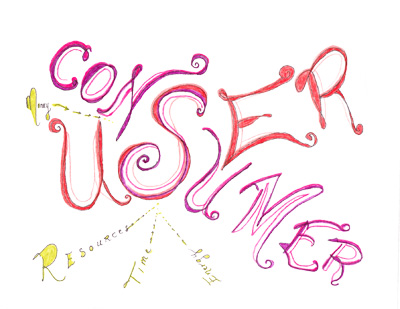
Tru Here.  Everyone has different hot-button terminology.  I don’t have a problem with “suffering” terminology, and a lot of the other words.  But I cringe every time I see the words “service user” or “consumer”.

In my experience the problem is not the impersonal nature of the term “service user”, but rather the consuming nature of the term.  We are the “user”, “consumer”, etc.  Our care “provider” is the “Giver”; the one who has what we will use up.  It all emphasizes the one-way road of resources.  It emphasizes our position of sucking up everything you have.   I realize that I consume resources.   I realize that I will use up every available resource and every ounce of energy that my loved ones can spare, but PLEASE do not throw it in my face!

How about dementia team of “warrior” and “coach”?  Every day (or more appropriately sometimes – night) is a battle.  My battle is the same as it is for you; to be the best “me” that I can be, despite dwindling resources.  My sacrifice is my self; MY all – because that is the known outcome of this war.  It will cost every single thing that I hold most dear, and my memories and connections with every being that I hold most dear.  Eventually it will cost my life.  I could just give up.  But I believe the battles are worth fighting, and the warriors ARE honorable despite the fact that they “consume” resources of others.

… Aren’t they?

So can we all together find some different terms, okay?

* Admin issues: SHARE dementia awareness thru buttons below. If interested in receiving notice of future blog postings there is a “follow” button in the upper left corner (MS Explorer) or lower right (Safari and Chrome). Feel free to leave your thoughts in the form of comments, but please filter your comments with truthful loving kindness to all concerned. If there is an advertisement below, I have no control over what is shown. — Full legal name Truthful Loving Kindness copyright on 2014-11/17.
// <![CDATA[
(function () { document.write("”);} () )
// ]]>

MyFreeCopyright.com Registered & Protected
alzheimers best blogs badge
Healthline

Melancholy Day

sunset 20141109 CLBS 6in150ppi

Losing every enjoyed activity –
in excruciating increments.

Tru here.  I realize this is just beginning stages and no sense in wasting too much time for focus of loss.
But also important to recognize loss, and endure the grief process, in order to best appreciate the time remaining.
Today has been one of those days.  Began with everything going wrong.
— Can’t even dump my food scraps into trash without making a mess on floor.  Three different messes in 15 minutes!

Losing every enjoyed activity and losing memory of every loved one – in excruciating increments.

When waking, I look at person in bed beside me and he is unfamiliar.
I don’t remember what my husband looks like, but I am certain I do not know this man in bed with me.
My husband is always careful to speak as soon as he wakes tho, because his voice makes everything “click”,
and then I know it is him.

In excruciating increments I am losing … YOU.
Moment by moment, day by day, and piece by piece I am losing Life.

So I need to make the most of each day,
… and make the most of each moment
… with you.
2014-11/10
(photo by daughter Christine Sanchez, taken from our upstairs window last night)

Quote: “I greet you from the other side of sorrow and despair
with a love so vast and shattered it will reach you everywhere.”
–Leonard Cohen

* Admin issues: SHARE dementia awareness thru buttons below. If interested in receiving notice of future blog postings there is a “follow” button in the upper left corner (MS Explorer) or lower right (Safari and Chrome). Feel free to leave your thoughts in the form of comments, but please filter your comments with truthful loving kindness to all concerned. If there is an advertisement below, I have no control over what is shown. — Full legal name Truthful Loving Kindness copyright on 2014-11/10.
// <![CDATA[
(function () { document.write(“”);} () )
// ]]>

MyFreeCopyright.com Registered & Protected

alzheimers best blogs badge
Healthline

Hold My Hand ‘n Anchor Me

819 Hands Anchor Me 6in

Tru here.
Now that I have experienced the fragmenting effects of dementia symptoms for myself,
I have discovered the GROUNDING and steadying effect from physical touch
in that unsteady, fragile, edge-of-the-cliff world.
I very much wish I had understood this when my maternal grandMother and Great-grandMother were walking this path.

.

Hold My Hand and ANCHOR ME

Maybe I am drifting,
… or maybe connecting and connected to a great mass.

… I don’t know.

Maybe …
instead of a being of objectivity, analyzing what I observe,
I am somehow becoming intimately connected with it;

… no longer the observer
but instead a tiny part
of what OTHERS observe and quantify and analyze.

Maybe I am not going AWAY from life,
and instead I am BECOMING life.

. . .
But,
my husband,
I would like to spend a moment
connected to you instead,
so please hold my hand
and ANCHOR me.

… Please.

13 Sep 2012

* Admin issues: SHARE dementia awareness thru buttons below. If interested in receiving notice of future blog postings there is a “follow” button in the upper left corner (MS Explorer) or lower right (Safari and Chrome). Feel free to leave your thoughts in the form of comments, but please filter your comments with truthful loving kindness to all concerned. If there is an advertisement below, I have no control over what is shown. — Full legal name Truthful Loving Kindness copyright on 2012-09/13.  Tentative Dx is “Dementia without Behavioral Element”.   i need to remember that this entry copyright is now impacted by inclusion in book “Dementia-Friendly Worship”, and Jessica Kingsley Publishers now have some influence in usage of both text and picture.

MyFreeCopyright.com Registered & Protected

alzheimers best blogs badge
Healthline

My Motivating Hopes for Living Well with Dementia Symptoms

Motiv Ready Set Go

“What is your hope?”  “What gives you ability to keep on keeping on,
despite knowing what the future holds?”

Tru here.  MY Personal Motivation Summary:

  1. Primary motivation = spiritual relationship with my “greater power”.
  2. Confidence that my persona is not solely sourced in my physical brain. 
  3. Helping others:
  4. Relationship with loved ones (immediate/extended family, friends, and even my animals). DM and DAI play a big part here, enabling peer groups via either text or video chat.
  5. Crafts and creating ANYTHING.


 Details:

1.  Primary motivation = spiritual relationship with my “greater power”.  My cognitive abilities are dwindling, but my emotions seem unusually emphasized.  I theorize that my spiritual relationships are also capable of emphasis and growth during this time.  This is partially triggered by my maternal grandmother’s experiences and partially triggered by my own experiences.  I believe that dementia interferes with almost every OTHER function in life, but it does NOT interfere with our search for the Divine. Instead I think we are somehow even closer to that ephemeral consciousness … if we are only open and willing. Without confidence that there exists a loving purposeful consciousness capable of orchestrating a difference on earth, I am empty of any lasting meaningful hope.  But really that was true regardless of my circumstances in life.  Since five years old; long before my various disabilities, that was the foundation of my life — everything else was built upon it.  Beliefs about the entity’s characteristics have changed thru the years, but always there was an awareness of this existence; a loving purposeful consciousness capable of orchestrating a difference on earth.  I call that consciousness “G0d”, but am not offended if you have a different name for that entity.  While I still have some abilities, desire to be an example and help others is a secondary driving force, but those abilities are dwindling, so that hope only carries me so far.  Ultimately (once my dementia advances past the point of my ability to help others and I become primarily a burden to others) G0d is my only hope of meaning.  My persistence and satisfaction with life is the same as it has always been; G0d. https://truthfulkindness.com/2014/07/16/2012-1018-faith-and-dementia/

2.  Confidence that my persona is not solely sourced in my physical brain.   Phrases like “But my grandmother is mostly gone”, and “but she is not there any more” make me very angry, and encourage my friends’ decisions for early death.  If I am a Person With Dementia, my brain cells are dying and brain size is decreasing (whether it is measurable yet or not).  Thus my ability to communicate thoughts, needs, and experiences is decreasing.  But if persona is not confined to physical brain then my true essence does not decrease.  Besides my spiritual beliefs, a contributing factor to this opinion is research into near-death experiences, and the uncommon occurrence of near-normal speech and activity from severe dementia patients during their last days before death.  HOW can they operate as if their brain could hold information it no longer has the ability to hold?  I believe it is because physical brain does not hold the persona – something else does.  Thus lower brain capacity does not lower presence of my persona. https://truthfulkindness.com/2014/07/20/2012-0913-hold-my-hand/

3.  Helping others: Driven to write as long as possible in order to make use of this window of ability, in hope that what I write can someday be useful to those making policy decisions or instructing others in caregiver issues.  Dementia Awareness activities are important to me, as well as helping current patients thru dementiamentors.com (DM) and advocating thru PWD non-profit of DementiaAllianceInternational.org (DAI).  I have begun gathering blog entries of Persons With Dementia and publishing them in weekly newsletter called PWD Perspective (to see Dementia “Thru the Looking Glass” of fellow PWD Life Perceptions).  I also began Facebook entity called PWD Perspective to gather FaceBook status updates marked “public” for fellow PWD, also in order to make public the PWD perspective.  Poster for Dementia Mentors in memory of my two maternal grandmothers who traveled this path before me.  616 DM TLK 20140813 Low

4.  Relationship with loved ones (immediate/extended family, friends, and even my animals). DM and DAI play a big part here, enabling true peer groups via either text or video chat.

5.  Crafts and creating ANYTHING  makes me feel alive, and increases my energy.

* Admin issues: SHARE dementia awareness thru buttons below.  If interested in receiving notice of future blog postings there is a “follow” button in the upper left corner (MS Explorer) or lower right (Safari and Chrome).  Feel free to leave your thoughts in the form of comments, but please filter your comments with truthful loving kindness to all concerned.  If there is an advertisement below, I have no control over what is shown.  — Full legal name Truthful Loving Kindness copyright on 2014-10/31.
// <![CDATA[
(function () { document.write(“”);} () )
// ]]>

MyFreeCopyright.com Registered & Protected
alzheimers best blogs badge
Healthline

Arts ‘n Crafts with Dementia Symptoms – Cooking Tips

616 blog cookg crmr copy

Tru here.  Example of my cooking prowess from day before yesterday: tried to cook a super simple recipe so what could go wrong?  Cut finger (rather severely because picked up shears that cut bone) from tremors & poor estimate of finger placement when opening mix packet.  Meanwhile knocked liquid to floor and made mess that was running onto new cabinet.  Remembered need to use potholder but forgot HOW.  I know that makes no sense, but I think brain shattered from the other stuff.

Possible TOOLS:

One friend purchased chain-link glove to enable safe cutting despite tremors and distance/depth perception complications.  For her that works a lot better than heavy-duty gloves, which seem more difficult to keep clean and dry.

Possible TECHNIQUES:

Tips from Barry PankhurstWhen I am baking, so that I don’t make any mistakes and forget any of the ingredients, what I do is to:

1. Always have my typed-out recipe in front of me so that I can clearly see it and follow the ingredients list.
2. As I have Alzheimer’s and dementia I now always pre-weigh each of the ingredients into individual dishes and then lay them out in accordance with my recipe list.
3. Then when mixing and making the recipe I can double check and tick that I have all the ingredients correct as I add them into the recipe.
4. In the past when baking products, I could rely on my built-in memory clock to know when products would be baked “BUT  NOW” I have to use a baking alarm timer otherwise I would have to call myself (King Alfred).

As for all my ingredients I have my own very big bakery bench and behind me I have my own ingredients cupboard with everything labeled.  I also have a small bench and rack by the side of my large bench that has all my more bulky ingredients such as the flour and all my cake decorating equipment.  All my other tools are kept underneath my work bench on a shelf.

I also believe and still practice the philosophy that (Everything has its place, and should and must be kept in its place).  In this way it helps prevent any further confusion in my mind.

So to help my mind, it’s all about my preparation first.

***       ***       ***

From Max McCormickI use a lot of the same methods Barry does for cooking.  I line up the ingredients in order on the counter, then move them off to the side or put them away once I’ve used each one.  I also check off the steps on the recipe.  When I have to add more than one of something, like cups of flour, I mark each one with a tally mark on a piece of paper so that I don’t lose track of how much I’ve put in.

***       ***       ***

From Truthful:  In the past I was able to use simple mixes or make-a-mix myself, so that no one project was too complex.  Measuring each ingredient into 1-quart glass measuring cup allowed re-count if lost track of amount.  Alarms ensured power got turned off when done.  CLEAR, well-marked ingredient canisters simplified process of finding my ingredients since often word labels fail to register as ingredient I am looking for.

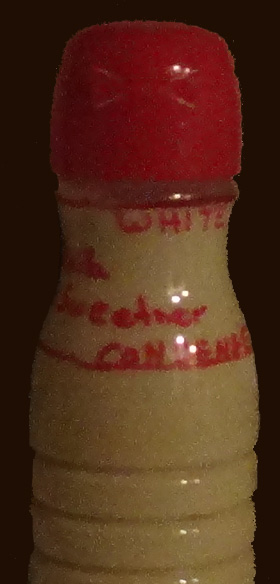
Unfortunately those techniques no longer work for me.  However there are a few things I can still make.  Container pictured above is used to make my creamer.  I put one can of condensed milk into bottle, filling to first red line marked “condensed milk”.  Then between the two red lines says “1/2 tsp vanilla and sweetener” so that goes in next; maybe a squirt of Gourmet Davinci Sugar Free Irish Cream (or English Toffee) Syrup.  Then fill to top red line with “White Almond-Coconut Milk”, as marked.

Shaker for protein drink is also CLEAR container marked for proportion of both wet and dry ingredients.  Then the contest is remembering to close the shaker lid before shaking (where I again messed up this morning, like in my blog of a month ago).

https://truthfulkindness.com/2014/09/09/distorted-decision-making-in-kitchen/

With chocolate protein in shaker cup I pour into CLEAR coffee cup until half full, then fill the rest with coffee (my husband makes) and add creamer.  I have yet to discover successful microwave time estimates other than the one-minute button.  …  I just need to remember not to trust my own estimates because my estimator is obviously broken!
* Admin issues: SHARE dementia awareness thru buttons below. Feel free to leave your thoughts in the form of comments, but please filter your comments with truthful loving kindness to all concerned. I am no longer sending out individual notices of new blogs, so if interested in receiving notice of future blog postings, subscriptions are available through “FOLLOW” button in the upper left corner (MS Explorer) or lower right (Safari, Mozilla Firefox and Chrome). If there is an advertisement below, I have no control over what is shown.  — Full legal name Truthful Loving Kindness copyright 2014-10/28.
// <![CDATA[
(function () { document.write(“”);} () )
// ]]>

MyFreeCopyright.com Registered & Protected
alzheimers best blogs badge
Healthline

Dementia Sundowning Concepts from Karen Francis

SunDng frm KarenF 6in300ppi
Ideas about “Sundowning” from PWD Karen Francis, friend who worked with memory impaired before becoming impaired herself:

What is Sundowning?

SUNDOWNING – Sundowning is a phenomenon that is associated with increased confusion resulting in a variety of behaviors that you may not see other times of the day. It can happen with any form of dementia. Up to about 50% of persons diagnosed with some form of dementia may experience sundowning. I have my own personal theories about why it happens when it does. Keep in mind that for each person, sundowning may occur at different times of the day – it’s called sundowning because it happens later in the day for a lot of people.

Some of the symptoms exhibited are:
*Anxiety
*Increased confusion
*Crying
*Agitation
*”Exit seeking” (wanting to leave or go home-even if they are home)

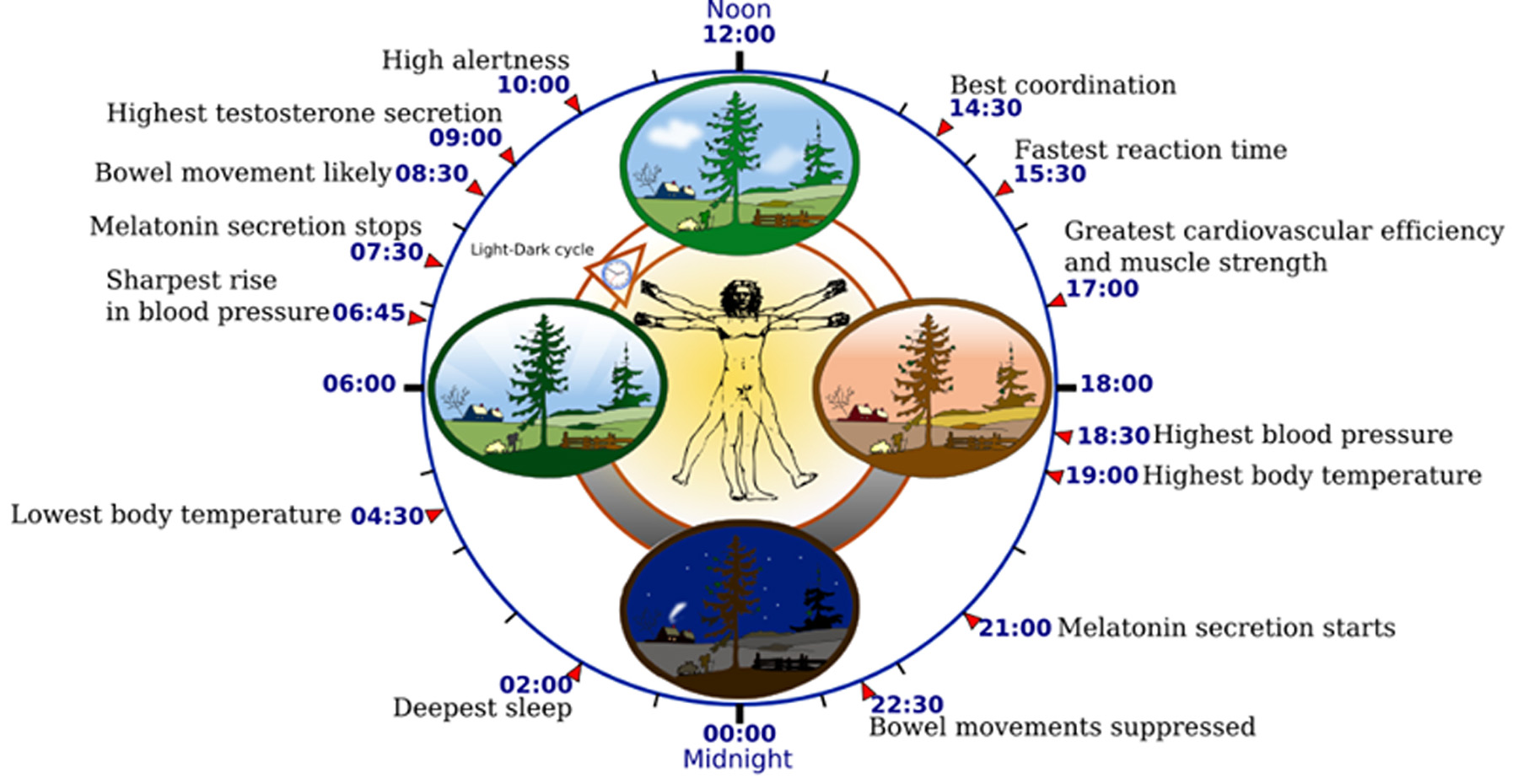
The specific cause for sundowning has never been proven. Many studies have suggested that this phenomenon happens because of a disturbance in the circadian rhythm or a “built-in clock”.Which means activity and behaviors are triggered by time of day, amount of daylight, change in season, full moon (and if you have never been in a memory care unit around dinner time during full moon, you don’t know what you are missing!) My co-workers and I always knew when it was full moon by observing behaviors without looking out the window!). Plants, other animals and creatures have been observed to be affected by a circadian rhythm.

Here’s my own personal observations, thoughts on sundowning and theory, based on my years of working with the memory impaired.

* For some, especially in a facility, I don’t always consider the behaviors exhibited around dinner time “sundowning” but rather a result of a day full of activities, visitors, visit with the doctor – simply over-stimulation and the need for a “time out” of spending a bit of time earlier in the afternoon (before the sundowning typically starts) simply relaxing – smaller groups, soft light, soft music, maybe a hand massage with some lavendar lotion. While facilities have great intentions in providing a full activity schedule, it may be too much for some. At home it may be over-stimulation or just a need to slow down later in the afternoon – turning off the tv, asking visitors to respect a need to limit time visiting or coming earlier in the day if possible.

Before I give examples, if you have a loved one or someone in your care who sundowns, think about what they did for a living before the disease and what their routine was like. Keeping their former profession and routine in mind, think about what they would have been doing at that time of the day. For someone who has problems with short term memory, as the disease progresses, the only memories that are left are the older memories of their life and routine, going back to when they were in their 30s. 20s, or earlier.

*Everyone experiences sundowning at different times of the day. Here are some examples:
*farmers: A farmer typically starts their day before the sun is even up! I have observed dairy farmers experience sundowning earlier in the day than most. When I look at the biography that I had the family fill out prior to admission and saw what they did for a living and that their day typically started at 3 or 4AM, it made sense to me when they began getting a bit agitated in the early afternoon, even though all their needs were met (they had lunch, perhaps a snack, they were toileted, etc) that 3 or 4 pm was the time of day they would be winding down their day, Moving equipment back in a barn, tending to herd, and after a day in the elements – the sun, the rain, the snow, they were ready for dinner and bed! At times I’d observe my farmer walking in and out of the building, agitated. Could he possibly be thinking, “This isn’t my farm!” “Where are my cows, my corn field, where is my tractor?”

*Housewife: A housewife took care of the home, cooked, cleaned, cared for children, their husband. Think about a routine for someone who had children and who’s responsibilities were to make sure their children came home directly after school, dinner prepared and on the table when their husband was due home. When 4pm rolls around and they can’t find their children (and I have observed ladies asking where their children are), they are supposed to be preparing dinner because their husband will be angry if it’s not on the table. Where are my children? where is my kitchen? At that time of day we would see ladies wandering through the facility, asking for their family, asking what they should do repeatedly, maybe even crying without being able to tell us why

*Office Worker/ Executive: A 9-5 job for some. A commute by bus or train for some to get to and from work. I cared for a gentleman who was a CEO of a major company that flew him around the country and beyond. Since I was almost always in a dress, he thought I was his flight attendant and would ask when his flight to Houston was boarding. For others, around the end of a typical work day, in addition to observing some anxiety, agitation we would hear comments like, “I need to get home”, “Where is my car”, “How do I get to the bus/train station?”

My favorite was the people asking when happy hour starts or gave me their drink order.

When you think about their behavior in those terms, it may be easier to comfort or calm them during that “sundowning” period. For the housewife – let her help set the table, tell her the kids are fine, they’ll be home soon. For the commuter – (we had little indoor porches with benches) take them to a spot to sit and tell them this is the bus/train stop. Bring some other “commuters” to the same sitting area. Hopefully they will begin interacting and they forget why they are sitting there. I’ve heard some interesting comversations at the”bus stop”.

A person who is sundowning may not be able to tell you what is wrong, what they want or need – they may just feel like there is something they should be doing but can’t communicate what that is which is why they are so anxious or agitated or sad.

Whatever the case, whatever the time of the sundowning, the goal is to try to put their mind at ease. Sometimes just slowing the day down for them before dinner and trying some soothing one-to-one attention may be the trick. For some that become very anxious, sad, agitated if all other interventions have been tried and still feeling those unpleasant feelings, perhaps their doctor needs to take a look at their current medications and even though I don’t like to suggest it, I hate more to see someone crying inconsolably, anxious or agitated to the point that they may hurt themselves or others – sometimes an anti-anxiety medication may help. If they have been prescribed an anti-anxiety medication already – look at the tie of day they are getting it. Sometimes it doesn’t mean that something needs to be added but the time of day it is given needs to be changed.

My biggest piece of advice is determine what time of the day they have had heightened anxiety. If it is a fairly consistent time of day (as sundowning usually is) be proactive in toileting them before that magical time of day, find soothing activities that you could engage them in – soft music, looking at a picture book and have them tell you about what they see and what they know and always be impressed by their story! Keep them or get them into a regular routine. Keeping them active throughout the day is important but wind down the level of activity as the day goes on.

The staff at Sacred Heart learns the life history and routine of each and every resident. We understand that sundowning may be an unpleasant time of day for some residents (except the ones looking for happy hour…lol). We have developed a routine that fits for each person. We are great at improvising or redirecting when one of our residents needs to be soothed.

For more information about sundowning, consider attending one of our support groups! Everyone has different experiences and may have better ideas or have found something that works to sooth a person who is sundowning.

Our support group at the Sacred Heart Senior Living in Center Valley is the 2nd Tuesday of each month (please call for time). Our support group at Sacred Heart by the Creek in Northampton is the 3rd Thursday of each month at 6pm.

alzheimers best blogs badge
Healthline

Privacy, Secrets, and My Dementia Symptoms

616 Blog secrets 4in200ppiTru here.  Remember, I can ONLY speak for myself.  Each person needs to decide for themselves on issues like this.  I will be discontinuing the “private” support groups I am member of.  It is just too difficult for me personally to remember who said what, in order to retain that “privacy” aspect.  Secrets have never been something I was comfortable with, and that kind of environment is too much adventure for me now.  Will I remember?  Will I properly associate the information, so as not to interfere with someone’s privacy?  What happens if I mess up?  I tossed and turned last night, wrestling with this problem.  Am I going to violate someone’s confidences because I don’t remember to whom that piece of information belongs, and that it belongs in the “private” category?  NO!!  The consequences are too great for my comfort.

Last year I told my family to leave me out of secrets.  Sooner or later this frontal-lobe filter will fail; that is an accepted part of this path and almost inevitable.  What spills out is controllable only by what gets put into the “do not say” folder for that part of my brain.

The one side of brain holds terms I am having great difficulty accessing because the vocabulary seems to be disappearing, causing my speech to become ever-increasingly halted and full-of-effort.  The other side, which lasts almost until the time of death, holds rhythm, music, songs, … and things I am not supposed to say.  I need to fill it to the brim with music and songs, and make sure the minimum amount of “secrets” are enclosed.

So it is not that I do not enjoy time spent with friends I have developed in these groups.  It is not that I do not value their friendship, I just cannot afford extra stress from the “privacy” aspect of group.  Please feel free to contact me; we can talk about nearly anything (except politics) but if you don’t want me to spill the beans, don’t put them in the pot.

* Admin issues: SHARE dementia awareness thru buttons below. Feel free to leave your thoughts in the form of comments, but please filter your comments with truthful loving kindness to all concerned. I am no longer sending out individual notices of new blogs, so if interested in receiving notice of future blog postings, subscriptions are available through “FOLLOW” button in the upper left corner (MS Explorer) or lower right (Safari, Mozilla Firefox and Chrome). If there is an advertisement below, I have no control over what is shown.  — Full legal name Truthful Loving Kindness copyright 2014-10/20.
(function () { document.write(“”);} () )

MyFreeCopyright.com Registered & Protected
alzheimers best blogs badge
Healthline

More Thoughts on Communication in Early Stages

616 Blog doors 3in100ppi
Tru here.  In the last year or so I don’t communicate one-on-one very well.  It has become strained and costs a lot of energy.

A common dementia symptom is my sound-processing disorder; trying to unscramble numerous connected sounds into words, sentences and thought sequences, in order to understand what someone is telling me costs me a lot more energy than it used to.

Trying to find words best representing my thoughts is no longer second-nature either; it is a lot of work.

I enjoy time spent with you but:

Do not expect sustained conversation with me.  Bring one or two slow-speaking (and slow-moving) friends and you can chat in my presence – letting me just speak up occasionally rather than requiring me to pull one-half of conversation.  Or maybe we could “chat” while doing something else, lessening my burden for carrying a conversation, like while walking, or gathering firewood, or washing dishes even.  Yes, I need to see your mouth moving when you talk, so look at me when speaking, but that gives me something to do so there is not an awkward silence while I try to match some words to the concepts floating around in my head.  We could fold laundry or take a walk outside, put together a puzzle or I could crochet while you work on a different project.

Please continue trying.  Follow my written blog; start when I began in July and then catch up with me.  The thoughts from most deep within me don’t come out of my mouth, they come out of my pen.  I am usually more effective at putting together my thoughts in writing than verbally.  And it is probably the single thing you could do to best learn my current status and learn how best to communicate with me.  My friend’s husband continued to write and draw – longer into his dementia than he continued to speak, and I suspect that may be true of me.

Don’t give up on me.  More and more I believe that what you can see on the outside can often be a poor representation of the “me” that is on the inside.  I need much more “time out”.  I need much more time in composing words and sentences.  …  I need much more time for EVERY thing, which means schedules and priorities must constantly be re-established along with new compensatory tools, in the ever=changing landscape of a dementia journey.  Travel along with me.  Follow my blog.  Since I can no longer notify everyone when new entries are posted, PLEASE subscribe (thru “follow” instructions below) and send to anyone you think might be helped by these words.

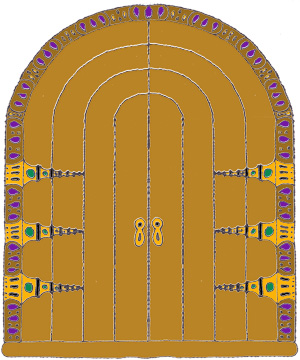
Husband says my outside might be medieval broken-down castle, but inside holds beautiful tapestries and gold-inlaid filigree on graceful arched doorways.  I just have difficult time swinging opening the heavy oak doors with their creaking rusty hinges. (( You didn’t believe me earlier when I told you he was rare and irreplaceably romantic, did you ?? LOL ))

* Admin issues: SHARE dementia awareness thru buttons below. Feel free to leave your thoughts in the form of comments, but please filter your comments with truthful loving kindness to all concerned. I am no longer sending out individual notices of new blogs, so if interested in receiving notice of future blog postings, subscriptions are available through “FOLLOW” button  in the upper left corner (MS Explorer) or lower right (Safari, Mozilla Firefox and Chrome).   If there is an advertisement below, I have no control over what is shown.  — Full legal name Truthful Loving Kindness copyright 2014-10/17.
// <![CDATA[
(function () { document.write(“”);} () )
// ]]>

MyFreeCopyright.com Registered & Protected
alzheimers best blogs badge
Healthline

Arts ‘n Crafts after Dementia Diagnosis – Samples

616 blog C20 Color 11in200ppi

No eloquence tonight … just pictures,
which can be clicked on to enlarge.

For those of us who craft, creating can be huge source of energy and motivation.

Above is craft in use of color.  Lauren U’s picture depicts the creatures from the hallucinations which surround her.
Mine is in center, and
Max McCormick’s image wonderfully depicts the effect of “Sensory Overload” as dementia symptom.

616 Blog c20 StdCraft 11in100ppi

…Max said “Since my diagnosis, I’ve tried to think of things that my kids might like to have to remember me.
There’s just something about having something tangible that was made with love.
I hope that I live long enough to have grandchildren, but if not, at least they will be warm in my blankets!”
Ann from Scotland made the gift in center.
Last image is greeting card, again made by Lauren U.
Pictures below are “Doodles” or “Zentangles”

616 Blog C20 DoodleZen 08in100ppi

616 Blog 320 Misc 08in100ppi

…  Above is Norrms performing his craft of public speaking, and me playing with my Nevel Harp.
Below are several pictures of my PWD friends’ craft of creating an environment with plants.

616 Blog C20 Plants 10in100ppi

… Crafting with words, by Kate Swaffer and Chris Roberts

616 Blog C20 Written 06in100ppi

…  Baking and decoration of baked goods is craft of Barry Pankhurst, below.

616 Blog C20 Food 06in072ppi

Next week I hope to bring compensating tools and techniques we use while creating, but I want to be able to gather as much as possible from my friends, so that means it might be longer than one week.
I suspect my next blog will be more on communication (maybe even later tonight) so stay tuned.

 * Admin issues: SHARE dementia awareness thru buttons below.  Feel free to leave your thoughts in the form of comments, but please filter your comments with truthful loving kindness to all concerned.
I am no longer sending out individual notices of new blogs, so if interested in receiving notice of future blog postings, subscriptions are available through “FOLLOW” button
in the upper left corner (MS Explorer) or lower right (Safari, Mozilla Firefox and Chrome).
If there is an advertisement below, I have no control over what is shown.

alzheimers best blogs badge
Healthline

Slipped Further into the Mire

Tru here.  Shaving cream!  I have slipped further and my compensatory tools no longer work.

I was using a matrix to track when I sent Tweets, in order to avoid duplicates and triplicate.  Now I am having too much trouble trying to use Excel that the tool is not helpful.  I am lost in the spreadsheet itself.  Why am I here?  What was I doing?  Instead of every few minutes getting lost, I can’t even get started!

Alarms no longer work because I don’t even know it is my own alarm, and I really don’t care to find out what it wants me to do; I just want the noise to stop.  Alarms have helped for over 5 years, but no longer help now.

Reading aloud no longer helps enough for me to understand sixth grade novels.  It worked for about six months.  I am in the middle of book.  I remember the drawing of bookworm that my sixth grade teacher drew when he visited our home.  Like I said before

this bookworm is running out of books.  (Make that has NOW run out of books.)

Discouraged and tears (having much more problem with words spelled same but different meaning, and words pronounced different but same spelling).  Tears on my face and tears in my dress.  It is much the same feeling.  Is it the same spelling?  Always been very good with spelling but don’t remember now.

Need to re-group and find my new “normal” so that I can gather some new tools.  Oops; did I already write this? (Last month discovered wrote first draft night before and saved, but forgot I wrote it so wrote it again.)  I guess wrote similar blog but three months ago; “My New Normal” at

— 2014-10/12
* Admin issues: SHARE dementia awareness thru buttons below.  Feel free to leave your thoughts in the form of comments, but please filter your comments with truthful loving kindness to all concerned.  If interested in receiving notice of future blog postings, subscriptions are available through a “follow” button in the upper left corner (MS Explorer) or lower right (Safari, Mozilla Firefox and Chrome).  If there is an advertisement below, I have no control over what is shown.  — Full legal name Truthful Loving Kindness copyright 2014-10/12.

MyFreeCopyright.com Registered & Protected

alzheimers best blogs badge
Healthline